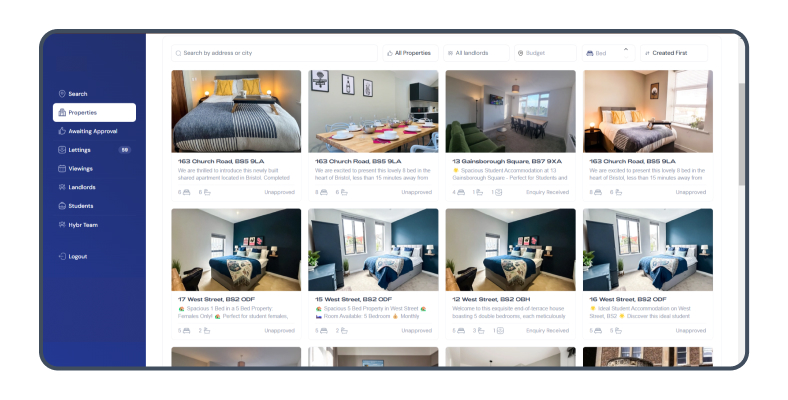
GENERIC PROPERTY SEARCH
Available search tools were not designed with student renters in mind. Filtering by university, occupant count, or distance to campus was not supported, making it difficult for students to narrow listings to genuinely relevant options.
INCONSISTENT LISTING QUALITY
Landlords uploaded photos without guidance or quality standards, and no automated tools existed to improve listing quality. Listings varied widely in presentation, reducing trust among student renters and making properties harder to compare fairly.
FRAGMENTED TENANT-LANDLORD COMMUNICATION
There was no centralized tool for scheduling viewings, tracking applications, or managing conversations between landlords and prospective tenants. Each interaction required manual follow-up and separate coordination.
FULLY MANUAL LANDLORD OPERATIONS
Creating listings, adjusting rental rules, responding to bookings, and managing multiple properties all required individual effort with no workflow automation. As a result, landlords could manage only a limited number of properties.
NO ROLE-SPECIFIC USER EXPERIENCE
Students and landlords have different workflows and information needs, yet existing platforms offered identical user experiences. Dedicated tools and dashboards were needed to better support each audience.
UNDEFINED REVENUE INFRASTRUCTURE
Without structured transaction management built into the platform, there was no reliable mechanism to capture revenue from completed rentals, creating a critical gap in the client’s business model.