

Classifieds Platform Modernization (Web & Mobile)
High-traffic marketplace performance improved through a classifieds platform upgrade that supports stable operation and ongoing delivery across web and mobile.
Whether your priorities are migration risk, delivery speed, or budget control, CHI Software acts as your end-to-end mainframe modernization provider — covering assessment, API enablement, architecture, cloud migration, and ongoing support.


























Before any code moves, we perform a detailed assessment and discovery of your full mainframe estate, dependencies, business logic, risk zones, and integration points. You get a clear modernization roadmap with sequenced workstreams, effort estimates, and a business case tied to your cost and agility goals.
We modernize core business applications as part of broader legacy software modernization without losing the business logic your operations depend on. Our mainframe application modernization services cover code conversion, refactoring, and replatforming with continuous integration and automated testing at every stage.
Accessing locked mainframe data is one of the biggest barriers to digital transformation and AI readiness. We expose mainframe workloads via standardized APIs. This breaks down data silos and enables real-time data integration with cloud-native applications and analytics systems, delivering increased agility across the enterprise.
Migrating selected applications from the mainframe to distributed platforms, cloud-native, managed Kubernetes, or hybrid cloud environments when the economics of the workload allow the shift. Our mainframe migration and modernization solutions ensure business disruption is minimized and that revert readiness is documented at all times.

Mainframe constraints accumulate faster than quarterly release cycles can absorb: a structured dependency assessment shows exactly which workloads carry the highest delivery and compliance risk before any migration decision is made.
Get a Free Mainframe Modernization AssessmentWith CIOs struggling to compare run costs against the change budget, the push to modernize cannot remain hypothetical. In its 2026 technology research, McKinsey indicates that managing infrastructure costs proactively is now essential for new AI and growth ventures, and that the mainframe often holds the funds.
Rising costs to maintain a mainframe operation will continue as the size and number of workloads increase and the hardware refreshment cycle decreases. Those organizations that maintain older legacy estates spend 25% to 40% of their total IT expenditure on maintenance alone, preventing funds from being used for other purposes and limiting their ability to reduce operating costs through modernization.
Mainframe change pipelines built for quarterly releases cannot support the continuous delivery cadence that modern product teams require. The result: delivery bottlenecks that slow time-to-market, frustrate engineering teams, and erode competitive positioning. Legacy code tightly coupled to batch processing makes even low-risk changes costly and slow.
IBM’s hybrid cloud research shows that real-time access to mainframe data is one of the most persistent blockers for modern enterprises. When transactional data lives in VSAM files and DB2 tables that are inaccessible to cloud-native platforms, data integration becomes an expensive workaround and engineering effort, and AI initiatives are blocked before they begin.
Reliance on a single mainframe platform vendor, combined with diminishing mainframe language expertise, equals multiplied risk. Contract renewal power will favor the vendor, expertise will cost a premium, and the knowledge transfer will become progressively challenging. Mainframe modernization minimizes the risk. The workload will be moved to open commodity systems.
Freeing the change budget from mainframe run costs is a governance decision, not only a technical one: a phased modernization roadmap shows the board exactly where OPEX savings appear and when.
Request a Board-Ready Modernization RoadmapThere is no single best path through a mainframe estate. The right strategy depends on your workload risk profile, compliance requirements, and the ROI calculation for each application group. Our mainframe modernization experts help you choose the right approach for each layer of your environment.
For proven, stable business logic that must not move, the first step is exposure, wrapping CICS and IMS transaction engines with REST or GraphQL APIs using technologies like IBM z/OS Connect. This unlocks mainframe data for hybrid cloud consumers without touching the underlying code, and delivers integration value quickly with minimal disruption to production operations.
Beyond API enablement, targeted modernization of data integration layers, such as replacing batch file transfers with event streaming, connecting DB2 to cloud-native data platforms, and eliminating ETL silos, unlocks real-time access to information.
Not all mainframe workloads belong on the mainframe. Batch processing pipelines, reporting systems, and non-core transaction flows can often be replatformed to Linux or cloud-native distributed platforms at significantly lower running cost. We use a risk-tiered classification to identify which workloads are safe to move first, delivering opex savings without touching the critical core.
When the business case is clear, hardware refresh cost, skills risk, compliance complexity, or growth constraints, a full mainframe exit can deliver transformational outcomes. CHI Software structures full migration programs in phases, with each phase delivering standalone value, so the organization is never committed to a single long-running waterfall that cannot be adjusted mid-course.

Assessment and Dependency Discovery We conduct a structured assessment and discovery of your mainframe estate, including source code analysis, legacy-language inventory, dependency mapping, batch-job classification, and integration-point documentation. The output is a complete picture of what you have, without assumptions, so the roadmap is grounded in reality rather than estimates.
Roadmap Architecture and Business Case Planning We translate discovery findings into a sequenced modernization roadmap with workstream priorities, architecture decisions for the target state, effort and cost estimates per phase, and a risk register with mitigation plans. You get a planning document that works for both your CTO’s technical review and your CEO’s budget approval process.
Code Conversion, Replatforming, and Integration Execution This stage executes according to the plan, in defined stages. Code conversion and refactoring are performed using automated testing and continuous integration controls in each stage. Replatforming involves applying the Blue/Green or Canary deployment strategy to minimize downtime. Integration activities are verified against original mainframe behavior prior to diverting production traffic.
Testing Stabilization and Knowledge Transfer Modernization is complete only when your team can operate and extend the new system independently. We run comprehensive functional, performance, and regression testing, document the modernized architecture, and conduct structured knowledge transfer sessions.
Every phase of the migration ships with rollback criteria, blue/green deployment patterns, and an RTO of under 15 minutes agreed before the first production change, so the engineering team retains control at every stage.
See the Phased Delivery and Rollback PlanOutcomes that matter to all three decision-makers: lower operating costs for the CEO, faster delivery for the CTO, and stronger compliance posture for the CIO, plus a cleaner path to hybrid cloud, AI readiness, and broader digital transformation initiatives.
Research for McKinsey’s 2026 tech budget predicts that intentional modernizers will have run-based infrastructure costs 20%+ lower than maintaining unreformed mainframe estates, with savings from lower MIPS consumption, fewer hardware refresh cycles, and fewer specialist support skills directly benefiting EBITDA margin.
Modern CI/CD pipelines, automated testing, and cloud-native deployment practices replace quarterly mainframe change windows with on-demand delivery capability. CHI-modernized platforms have achieved release cadences three times faster, transforming the engineering team from a bottleneck into a competitive advantage.
Modern architecture offers a systematic approach to collecting evidence. Use of structured logging, access controls, security-by-design patterns, etc., drastically reduces the effort required to prepare for an audit and minimizes risk across various standards (GDPR, HIPAA, PCI DSS, NIS2, etc.).
An API-enabled, data-accessible mainframe — or a fully migrated cloud-native platform — connects to modern data pipelines, analytics platforms, and AI tooling. Approximately 32% of legacy systems cannot connect to AI tools without prior modernization. Completing the modernization work removes that blocker and accelerates your digital transformation roadmap.
A fixed-scope pilot delivers a measurable outcome, a documented ROI model, and a phased plan your CFO can approve before any long-running commitment is required.
Start With a Fixed-Price Mainframe PilotEffective mainframe platform modernization addresses the real operational surface of your environment, not abstract platform categories, while preserving core system continuity throughout.
The legacy application code encodes your pricing rules, compliance calculations, eligibility decisions, and core transaction logic. We analyze, document, and modernize this layer with full behavior validation — so the business logic you rely on is preserved exactly, in a platform you can maintain and extend independently.
High-volume batch pipelines, end-of-day settlement runs, statement generation, interest calculation, and payroll execution are modernized to operate on scheduled, cloud-native workflows, or event-driven architectures. Re-platform the transaction processing engines and document and test latency, throughput, and failover.
Reporting flows that pull data from mainframe sources are often the most straightforward starting point for modernization. We replace batch report extraction with real-time data integration, connect mainframe data to modern BI and analytics platforms, and eliminate the overnight delays that prevent timely operational decision-making.
Online banking portals, insurance self-service platforms, healthcare patient portals, and other customer-facing channels that rely on mainframe backends can be modernized incrementally. API enablement decouples the front-end delivery cadence from the mainframe change cycle, allowing your digital teams to move at market speed while core modernization proceeds in parallel.
In environments where uptime, compliance, and auditability are non-negotiable, modernization must reduce operational drag without compromising resilience. CHI Software has active delivery experience in the two industries where mainframe risk is highest.
Healthcare mainframe environments contain years of patient data, patient claims-processing logic, and regulatory requirements as stipulated by HIPAA, GDPR, and national health data schemes. While modernizing, systems will need to maintain auditability, security controls, and uninterrupted patient-critical processing – the business cannot tolerate any data loss or corruption risk during migration.
Core transaction engines, payment settlement, and risk calculation pipelines run on financial services mainframes that are simply unable to withstand unplanned outages. Now that the EU DORA regulation is in effect and PCI DSS 4.0 requirements are mandatory, the modernization program itself (as opposed to its deliverables) falls within the regulatory scope.
High-traffic marketplace performance improved through a classifieds platform upgrade that supports stable operation and ongoing delivery across web and mobile.

Through step-by-step modernization, CHI Software transformed a legasy DSD platform into a scalable, efficient tool — achieving 97% retention and faster, smoother logistics.
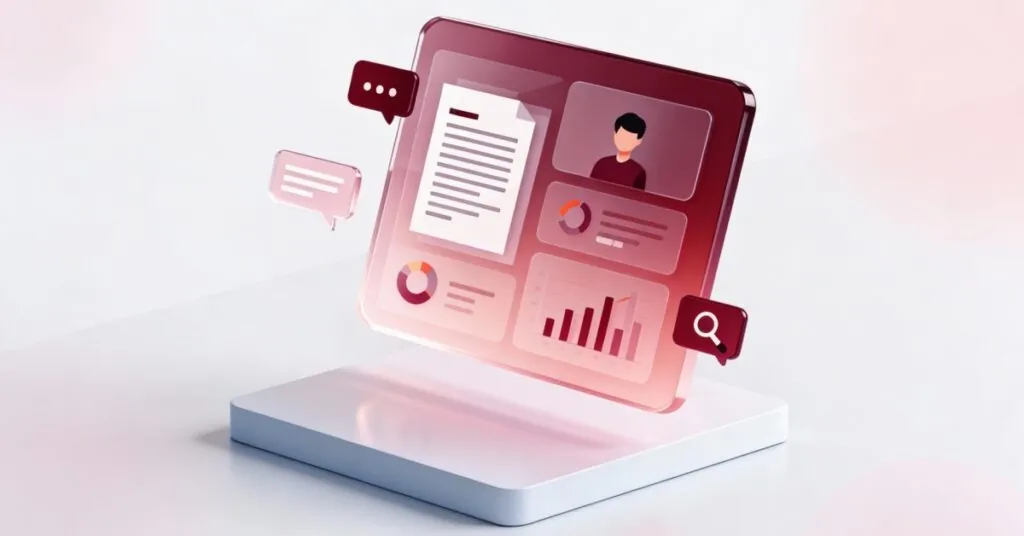
Here’s how CHI Software turned a fragile HR tool into a stable, scalable employee data platform



We understand every real pain point: fear of downtime, loss of control, vendor sprawl, and ambiguous ROI. CHI Software’s mainframe modernization service delivery approach was designed from the ground up to target each of them directly, with commitments in the process, not with soft assurances.
Our team always began any engagement with a defined fixed-priced assessment. Prior to engaging in the larger program, you will understand the approach, the deliverables, and who is involved; SLAs on quality and rollback readiness will be incorporated.
99.9-99.95% of uptime maintained on live production environments throughout live migration programs. Blue/Green Deployments, Canary releases, and Feature Toggles will be chosen based on the workload’s risk. All rollback plans have an RTO of under 15 minutes, agreed upon before the first deployment.
Ownership of the IP is defined in the contract before any work begins. The infrastructure-as-code remains within your repository. The knowledge transfer is a delivery stage rather than an afterthought. Three programs were delivered, and at the close of the program, the client’s team is completely self-sufficient.
Every phase has a measurable outcome and a defined scope. You are never committed to a long-running program without visibility into what the next milestone delivers. Executive reporting is structured around the business metrics that justify the investment.
CHI Software is an ISO 27001-certified company, so security controls are applied right from the first sprint-not as an add-on or “after the fact.” If regulated industry, corporate procurement, or data handling is a firm requirement, this information is crucial.
We cover every stage of our mainframe modernization solutions: assessment, roadmap architecture, code conversion, API enablement, cloud migration, testing, and knowledge transfer. There is no hand-off between separate vendors managing separate phases. CHI helps to run live systems while transforming the architecture.

At Imagine Learning, we highly value our collaboration with CHI Software. Their skilled AI and generative AI engineers have significantly enhanced our K–12 education solutions.
With CHI Software’s help, we have developed tools for providing feedback on student writing, mechanisms to create learning content based on reading education strategies, and a series of chatbots that provide efficient and accurate information access for our teams. Their ability to deliver specialized applications swiftly demonstrates their agility.

VP, Product Management, AI Initiatives at Imagine Learning
CHI Software played a crucial role in optimizing our mobile application, ensuring seamless functionality across iOS and Android platforms. Initially brought in for a short-term fix, their expertise quickly became indispensable as they resolved critical publishing issues, modernized outdated libraries, and enhanced navigation. Their proactive approach in identifying and fixing hidden flaws significantly improved app stability and usability. CHI Software’s adaptability, deep technical knowledge, and ability to streamline a previously fragmented system have made them a trusted technology partner in this project’s success.

Lead Data Engineer at Cefetra Group B.V.

The CHI Software team successfully developed upgraded versions of the company's products with new functionalities and features. Thanks to these contributions, the company was able to increase its number of platform users and deepen the level of their engagement.

Founder at Albert AB

We have an in-house technical team but we needed a partner who could perform development in fields that we couldn’t cover. CHI Software has designed and developed an iOS and Android app, including its server backend and the site crawler it uses — it’s a big part of our system. They took the solution from an MVP to its final stage. We’ve been very satisfied with the team, they are very good in terms of planning, project management and customer care.

CEO at Democra.C
CHI Software Team were involved in the whole SDLC, including design development, implementation and maintenance of new and/or existing application systems. We had an excellent experience working with them so far.

CTO at BetterTradeOffPteLtd

A regulated-grade quality and security management system governs every mainframe engagement, with full IP transfer, infrastructure documentation in your repository, and a vendor assessment package available for your procurement and legal teams before signature.
Request the Security and Delivery Package
There is no single “best” path; we tailor the strategy based on your specific risk tolerance and business goals. Our mainframe modernization consultants evaluate your estate and recommend an approach ranging from API enablement on the mainframe to targeted replatforming or full migration.
Timelines depend on complexity and scope. We provide a detailed project roadmap with milestones and delivery timelines during the assessment phase. CHI Software has structured every engagement into phases with defined milestones, budgets, and rollback points
CHI Software operates within mainframe stacks like PL/I, Assembler, JCL, CICS, IMS, DB2, and VSAM. We modernize the transaction engines, batch-processing lines, reporting layer, and systems that present to the customer in a legacy environment.
Yes. Our primary goal is to extract and preserve your valuable business logic, encapsulating it in modern services so it remains functional and maintainable in the new architecture.

About cookies on this site