Digital Assessment Platform Modernization
With AI scoring, advanced analytics, and LMS integration, CHI Software helped an EdTech provider turn its legacy system into a smart, scalable assessment platform.
To support HR operations across multiple countries, a large retail company partnered with CHI Software for employee management software modernization. The result: a faster, more reliable platform with optimized document workflows, GDPR compliance, and 40% lower infrastructure costs
Retail
Denmark, Sweden
We needed to stabilize and upgrade a growing employee data system that handled contracts, cases, maternity flows, and sensitive HR documents
We completed a long-term employee data management system modernization on Azure with a focus on documents, legal flows, performance, and integrations
12 specialists
October 2018 - ongoing
reduction in cloud and operational costs for the HR platform
faster performance during heavy HR workflows
quicker deployments through CI/CD automation
faster investigation of production incidents thanks to improved audit logging
CHALLENGE
This retailer already had an internal tool for contracts, cases, and HR documents, but its performance capability was unstable and difficult to extend. Managers working in two countries and languages needed to juggle constantly changing policies related to employees, such as laws on maternity leave. What made things more complicated was that the data lived in several systems at once. The company needed to be confident in a focused employee data management software modernization so that HR teams could rely on one platform for everyday work and long-term compliance.
ENGAGEMENT STAGE
Our team got involved with the project shortly after its first release, when the platform was technically live, but still fragile – it still felt like a beta. Together with business stakeholders, we mapped out the real flows for contracts, maternity, salary changes, and GDPR rules. Out of these initial workshops, a roadmap to modernize the employee data management platform step by step without stopping HR operations began to emerge.
TRANSFORMATION
Over time, the application grew into a central HR system rather than a haphazard and risky tool that would end up sitting on the sidelines. While the new form builder and versioning engine we implemented were able to stabilise legal documents, the new flows covered both old and new maternity rules, and Redis-based processing improved speed. This all happened even as data volumes were increasing, which attested the strength of the results. Data pipelines now synchronize external providers automatically, supporting practical HR system modernization that managers in both countries use every day.
SERVICES PROVIDED
DEVELOPMENT TEAM
CENTRAL EMPLOYEE DATA PLATFORM
At first, information about employees was scattered across several systems and manual files. The client needed a focused employee data management system modernization so that managers could easily view cases, contracts, and history in one place.
DOCUMENT WORKFLOW AND COMPLIANCE
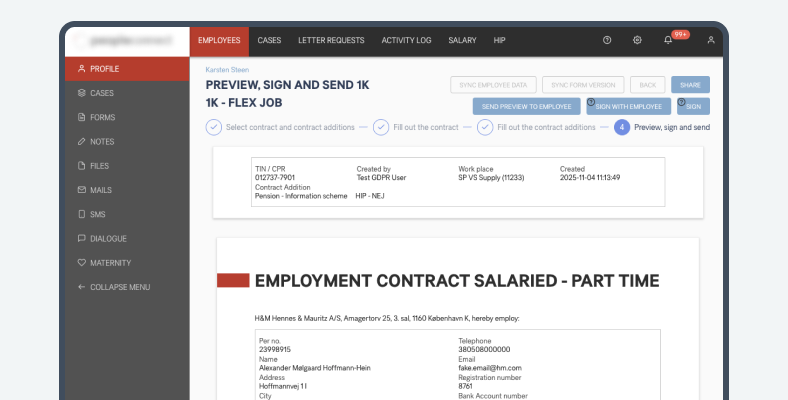
Contracts and legal forms needed to remain flexible until all parties signed – at which point they were completely frozen. Clear document workflow modernization was absolutely essential for audits and legal certainty.
COMPLEX MATERNITY AND HR FLOWS
Changes in maternity law created parallel flows that could continue running for years. The platform had to be able to support HR and staff in both countries – even with different rules and document sets – without confusing managers or employees.
PERFOMANCE AT SCALE
As records grew, the app slowed down. HR teams wanted to work in real time rather than wait for screens to load. Performance had to match the reality of thousands of employees and long-running histories.
DATA EXCHANGE BETWEEN PROVIDERS
Several external data providers were in use. Transfers often took place manually, which did not bode well for scalability and had a tendency to create misaligned records.
GDPR AND BILINGUAL EXPERIENCE
The business needed a unified GDPR approach and full support for two languages in all interfaces and documents, while still keeping content editable where possible. This requirement is tied directly to employee HR data management optimization and is essential to overall trust in the system.
STRATEGY
The strategy focused on guided evolution. The platform served daily HR work, so shutting it down or rewriting everything at once was not an option the client could consider. Together, we created a roadmap that mixed bolstering stability-focused tasks with new capability boosts. By the time we finished, we are proud to say that we managed to modernize the employee data management platform while keeping all the business’ existing processes running.
DEVELOPMENT PHASES
Engineers reviewed the original data models for employees, contracts, maternity cases, and HR events. Critical bugs were, of course, addressed first. Then, tables and relations in the database were adjusted to remove inconsistencies and support future changes with the foundation for true employee data management software modernization.
A new flexible form builder gave managers control over document structure — they could choose what data the system collected, set validation rules, and create conditional visibility for fields. A versioning engine locked each document configuration once all parties signed, which matched legal expectations and supported long-term record keeping.
In this case, the business analysts’ success depended on turning maternity law and other HR rules into clear system flows. The application now carries old and new maternity processes in parallel, and managers can switch flows when needed without manual workarounds. With each day, working on cases became more predictable and structured, which helped optimize employee management for both HR teams and line managers.
Redis caching and background workers took over heavy operations such as bulk updates and synchronization. Heavy tasks moved away from user actions, so screens needed for routine daily work load faster and feel more responsive. Reports and exports no longer block other users who work in the system at the same time, which supports ongoing employee HR data management optimization.
Custom pipelines now synchronize data with external systems in near real time. HR staff no longer have to copy information between different tools by hand, which makes data consistency better across all connected platforms. Reliable data flow and aligned reporting emerged as one of the key steps in broader HR system modernization for the retailer.
Azure resources needed to be reviewed and tuned. Our solution centralized the logging and activity tracking, which made it easier to understand everything that went on in the production stage. As a consequence, infrastructure costs also fell because unused capacity issues were no longer a problem with the resized workloads.
Access rights now mirror the organization structure, so each manager or HR specialist sees only relevant employee data, which supports secure employee HR data management optimization.
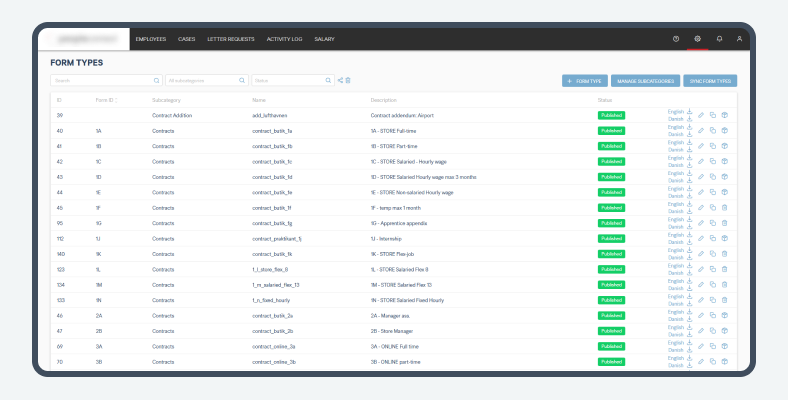
HR teams can create and adjust templates for contracts, maternity leave letters, and cases in the system, keeping document workflow modernization under their control without involving developers.
Signed documents are locked as versions, while any new changes create fresh revisions – this way, legal and HR teams always know which text applied at a specific moment in time.
Employees can simply open a link, read, and sign documents from any device, which saves managers hours of printing, reminding, and manual chasing.
Screens and documents are available in two languages, letting managers and employees work comfortably across Denmark and Sweden on a single platform.
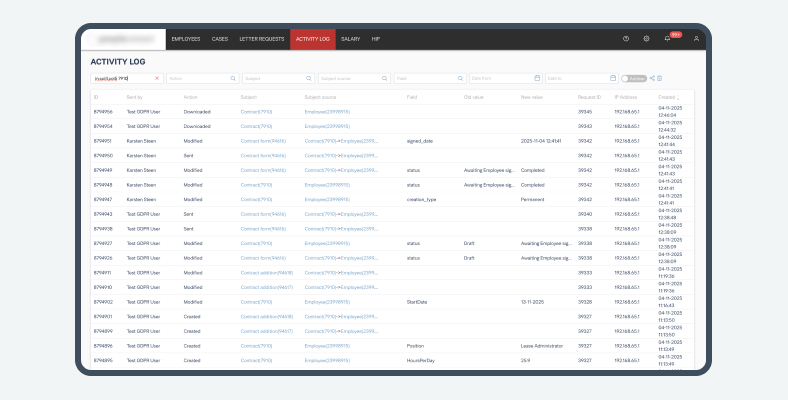
Every key action is recorded in detailed logs, so support teams can reconstruct the story of any case if they need to, keeping the whole process of the employee management software modernization transparent and auditable.
40% LOWER CLOUD AND OPERATING COSTS
Cloud resources were redesigned to be exactly the right size – not too big and not too small. The client now pays less for their platform while gaining better observability and control.
40-50% FASTER SYSTEM PERFORMANCE
Caching and background processing reduced response times for large datasets. HR teams move through lists, cases, and documents much faster than before.
FASTER DEPLOYMENT
CI and CD pipelines cut deployment time and manual effort. New features and fixes reach production quickly, which keeps the HR platform upgrade effort continuous rather than seasonal.
5х FASTER INCIDENT ANALYSIS
Improved logging and clearer entity mapping made production issues easier to trace. Teams can now investigate incidents in hours instead of days.
FASTER DELIVERY OF TYPICAL FEATURES
Systematic refactoring prepared the platform for new HR flows. Adding a standard feature or document type now takes a fraction of the earlier time, proving the long-term value of employee management software modernization.
Companies that plan employee data management system modernization or want to modernize the employee data management platform can rely on CHI Software as a long-term partner. The team helps HR, legal, and IT work together on platforms that are safe, flexible, and ready for change.
WHAT WE SPECIALIZE IN
WHO WE WORK WITH
With AI scoring, advanced analytics, and LMS integration, CHI Software helped an EdTech provider turn its legacy system into a smart, scalable assessment platform.

Our client is a big Danish retail company focusing on quality fashion and clothing.

Through step-by-step modernization, CHI Software transformed a legasy DSD platform into a scalable, efficient tool — achieving 97% retention and faster, smoother logistics.
About cookies on this site
We use cookies to give you a more personalised and efficient online experience. Read more. Cookies allow us to monitor site usage and performance, provide more relevant content, and develop new products. You can accept these cookies by clicking “Accept” or reject them by clicking “Reject”. For more information, please visit our Privacy Notice