
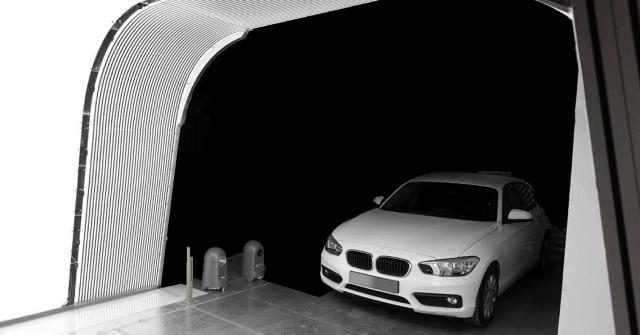
AI-Based Machine Condition Monitoring Software
Our client is one of the leading providers of AI-driven automotive solutions in Tel Aviv, Israel.
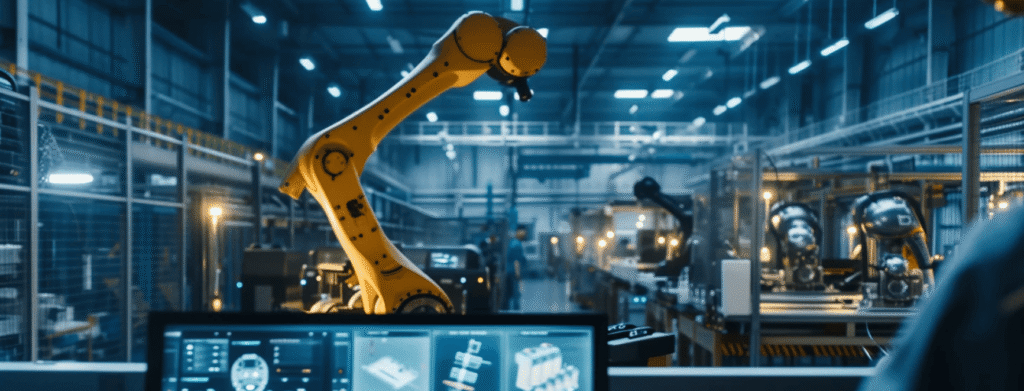
Your equipment is becoming a software product. CHI Software builds the firmware, connectivity, data platforms, and integrations behind it, so OEMs and industrial companies get one engineering partner from the sensor to the dashboard.
Industrial products are becoming software products. The machine’s functionality is no longer the primary selling point. The firmware, the data it sends back, and the services built on top of that data are what consumers are interested in now. This shift creates significant engineering challenges for OEMs and industrial enterprises. They need people who understand C programming on constrained boards, cloud pipelines that can handle telemetry from thousands of installed units, and the compliance obligations that now come with connected products (including CRA and the Machinery Regulation 2023/1230).
CHI Software is a manufacturing software development company that works across these layers. We develop embedded software, connected-product platforms, industrial data systems, and integrations that connect equipment to enterprise workflows. We are one engineering partner from the sensor to the dashboard. See below for what we do, who we do it for, and how we run the work.

























Manufacturers rarely have only one software gap. For example, firmware is delayed because the board changed. The connected-product roadmap has stalled because no one is responsible for the cloud side. Plant data sits in four systems that do not communicate with each other. A decade-old platform is still running, but implementing every new feature takes a quarter.
Our manufacturing software development services cover those problems with three practice areas working together: Embedded and IoT, Data and AI, and Modernization and Cloud. You can engage one of them or all of them. The point of custom manufacturing software development is that the work fits your equipment and your constraints, not a template.
A quick note on where the market is going. Deloitte’s smart manufacturing survey of 600 manufacturing executives found that 80% planned to put at least a fifth of their improvement budgets into smart manufacturing initiatives. The money is moving toward connected operations and product intelligence. The teams that can actually ship that software are the bottleneck.
Before writing code, we map out the problem. We ask ourselves: What does the device need to do? What operating system does it run on? Which regulations apply? What must be integrated with the existing stack? Our manufacturing software development consulting begins with your engineering reality, including uncomfortable details such as undocumented bootloaders or suppliers controlling the hardware schedule.
The final result is a technical plan that you can present to a board to get funding. It includes scope, architectural direction, a risk register, and a realistic sequence of events. If you are in the early stages, our product discovery services will turn your rough concept into a validated specification before you commit to the wrong design.
This is the main build. CHI’s custom manufacturing software development services cover the entire process: architecture, development, integration, validation, and release. We develop software designed to withstand long hardware lifecycles, intermittent connectivity, and field conditions that web apps never encounter.
We choose the technology for the device and support window based on functionality, not fashion. A board with 256 KB of RAM yields different results than a Linux gateway. This distinction is what sets custom software development for manufacturing industry apart from generic app development. We provide custom software development for manufacturing firms building their first connected product and for established makers scaling an installed base.
Most industrial software projects quietly go wrong in the firmware. There are timing bugs, memory corruption, and watchdogs that mask real faults. Our embedded software development services and firmware development services cover bare-metal, RTOS, and embedded Linux targets. We ensure that our testing rigor meets the demands of long-lived equipment.
We handle the less glamorous parts too, such as bootloaders, over-the-air update flows, secure boot, and the reporting obligations that now come with connected products in the EU. If your firmware works, but no current engineer fully understands it, we can take ownership of the code instead of insisting on a rewrite.
An industrial IoT system is only as good as its weakest link, which is usually connectivity. We develop device agents, protocol translation, an ingestion layer, and a provisioning flow that enables you to bring a fleet of connected devices online without a technician having to touch each one.
This is where product telemetry begins to generate revenue. Once equipment reports its status, you can offer monitoring, usage billing, and other aftermarket services. When executed properly, industrial connectivity becomes the foundation for every subsequent data product.
Telemetry is raw material. In order to make it useful, real-time data analytics, industrial data integration, and models that answer specific questions are necessary. First, we build the pipelines, and then we develop the AI because machine learning on dirty or fragmented data produces unreliable results.
Applied use cases we deliver include predictive maintenance, anomaly detection, and computer vision for quality control. For reporting and self-service, our business intelligence consulting services provide production dashboards to the people who run the line.
Equipment does not operate in isolation. It has to reach your manufacturing ERP, your MES, your maintenance system, and sometimes a customer portal. We build the integrations and the business applications that connect industrial operations to enterprise workflows, so a reading from the shop floor can actually trigger a purchase order or a service ticket.
For deeper ERP work, our ERP consulting services align the integration with how finance and operations already run. When the requirement is a larger internal platform, custom enterprise software development services give you a system built around your processes rather than forced into someone else’s product.
Most industrial software is not greenfield. It is an existing system that has become costly to modify. Nevertheless, we modernize selectively. Our team keeps what earns its place, re-engineers what hinders progress, and leaves the rest alone. Our application re-engineering services and data modernization services reduce technical debt without the all-or-nothing rewrite that frightens every risk-averse CIO.
The objective is straightforward. We make the software easier to extend, cheaper to run, and ready to connect to the aforementioned data and AI work.
Industrial products have long lifespans, sometimes spanning decades. The software behind them requires the same timeframe. Our services include software maintenance and support, firmware patching, security updates, and validation for regulated environments. We plan for this long-term commitment accordingly rather than treating it as an afterthought bolted onto a finished build.
Building with firmware, sensors, or HMI? Get engineers who know hardware, long support cycles, and CRA reporting. Start with a quick review, get clarity in just weeks.
Book an Embedded & CRA ReviewThe above services illustrate our work process. This section is about what you get: manufacturing software development solutions that operate within your product or around your installed base. The common thread is software that makes equipment more reliable and visible and capable of supporting digital services long after leaving the factory.
There is real pressure to get this right. McKinsey’s research on aftermarket service surveyed 250 industrial buyers and found that 70% had seen no improvement from their providers over the previous decade, while 80% planned major changes to their service purchasing within two years. Buyers are ready to switch to whoever delivers a better connected-service experience. The software is how you win that.
The HMI is the operator’s experience of your machine. We develop responsive, safe, and legible human-machine interfaces and control applications that function properly under real conditions, including the use of gloves, glare, and vibration. Whether the target is an embedded Qt touchscreen or a companion mobile app, the control layer must behave predictably every time because an unclear interface on industrial equipment is a safety issue, not just a design nitpick.
This is our flagship connected product solution. Machine and condition monitoring feed a platform that tracks the health of every unit in the field. Predictive maintenance models identify failures before they stop production. For OEMs, the platform also generates new revenue, since customers will pay for monitoring and uptime guarantees.
Human inspectors may overlook defects when they are tired, which is why consistency is crucial in quality control. Our computer vision systems inspect parts on the production line, identify defects early on, and log every decision for traceability. The model is not the hard part. Rather, the challenge lies in the lighting, fixturing, and edge hardware, which must run inference quickly enough to keep up with the conveyor. We handle the entire setup.
Once the equipment reports in, leaders want an overview of the entire fleet. We create production dashboards and fleet analytics that transform thousands of device streams into actionable decisions for managers. Users can drill down into one unit, compare a site to the network, or watch for trends before they become faults.
Operational data becomes more valuable when it reaches the systems that run the business. We connect production and equipment data to the manufacturing ERP system and develop business applications around it. This ensures that planning, procurement, and finance departments all work with the same numbers as the shop floor.
In some cases, the correct response is to use a portal. We build production-site portals and operational tools that provide distributed teams, field technicians, and occasionally customers with a centralized location to view status updates, submit requests, and manage work. These portals are the connective tissue between industrial operations and everyone who depends on them.
Outdated ERP portals, mysterious firmware, and rigid integrations slow every new feature. For OEMs and industrials, this tech debt only grows. Our focused modernization reviews pinpoint urgent fixes without disrupting delivery.
See our application re-engineering servicesWe are most useful to companies whose product is partly software. If your machine ships with firmware, talks to a cloud, or is heading that way, we speak your language. Below are the organizations that get the most from working with us.
Within those companies, two roles typically influence the decision, and they evaluate us differently. Heads of R&D and firmware leaders focus on technical delivery. They ask, “Can these engineers reliably deliver embedded code on our hardware?” On the other hand, CIOs and digital transformation leaders look at interoperability, investment efficiency, and whether the project will jeopardize business continuity. We address both concerns because a project will stall if either group objects.
For original equipment manufacturers (OEMs) building software-enabled machinery, differentiation increasingly lies in firmware, controls, and connected services. Our R&D team can be bolstered by embedded and platform engineers who are well-versed in the limitations of real hardware and extended product lifecycles.
For electronics and connected-product businesses, the challenge is scale and connectivity. Bringing thousands of devices online, keeping them updated, and building the data services that justify the “connected” label. That is squarely what we do.
Established manufacturers often have decades-old industrial software that works, but it blocks every new initiative. For CIOs, these systems are a direct bottleneck: outdated architecture is often why transformation stalls. We help with selective modernization, data integration, and the AI readiness that comes after. The modernization process is characterized by a low-drama, measured-risk approach, with ongoing delivery throughout.
Engineering capability only matters if it impacts business numbers. Here’s how the work above changes things for R&D leaders and CIOs. First, a fair warning: software improves what software touches. We have control over equipment uptime and telemetry. The success of broader factory automation initiatives hinges on elements beyond our control, including machines, sensors, and processes. We’ll provide precise details about the limits of our control rather than making promises we can’t keep.
When firmware, cloud, and data engineers collaborate under a unified plan, handoffs won’t disrupt your schedule. Features that once required a quarter’s worth of cross-team coordination now ship on a predictable schedule. Thanks to faster software releases, your product will continue to improve after its launch.
Condition monitoring and predictive maintenance detect potential failures before they cause interruptions. You will experience less unplanned downtime and lower service costs per unit. Your service organization will be able to plan instead of respond to emergencies. For installed equipment, this is often the fastest way to generate profit from the entire program.
You can’t improve what you can’t see. Fleet dashboards and real-time data analytics provide leaders with an accurate, up-to-date view of how their equipment performs in the field. This turns guesswork and unexpected warranty costs into data-driven decisions.
Software designed for the long term is less expensive to maintain. Clean architecture, test coverage, and documentation ensure that the development of the next feature does not require reverse engineering of the previous one. Maintainable systems prevent the need to rebuild the same platform every five years.
Our process is designed for the realities of the industrial sector, where hardware lifecycles are long, and it is not feasible to delay software development while waiting for the next board revision. Here’s how we handle software development for manufacturing companies from start to finish.
The process begins with an understanding of the equipment, constraints, and existing systems. This includes hardware specifications, existing code, integration points, and regulatory scope. The hardware and software teams also align at this point, as ignoring the board will likely require a complete rewrite.
Next, we design the architecture and, early on, prove the riskiest parts with a focused prototype. We validate the timing, connectivity, and integration, whatever is most likely to fail, before it is buried in a full build. Here, you see and approve the direction, not six months later.
Development occurs in milestones, each of which is something you can inspect. As we go, we integrate with your existing enterprise systems and test continuously with the depth of validation that regulated and safety-relevant industrial software requires. We make milestone progress visible so that you always know where we are in the process.
We make changes slowly and carefully. We have a plan for every problem. After launching a product, we provide ongoing support, including monitoring, patching, security updates, and feature development. Our software is designed to improve over time, eliminating the need for disruptive, big-bang upgrades throughout the hardware’s long lifecycle.
Our client is one of the leading providers of AI-driven automotive solutions in Tel Aviv, Israel.

Our client is a leading HoReCa company with the main focus on smart kitchen furniture and appliances. The company designs, manufactures, and supplies accelerated cooking systems worldwide.

Our client is a manufacturing solutions provider with over 260,000 employees across 100 locations in 30 countries. One of the client's divisions needed to develop embedded software to maintain, calibrate
We choose technology based on device constraints, hardware compatibility, maintainability, and the length of time you will need to support it. Not for novelty. A choice that looks modern today but loses vendor support in two years becomes a liability for a product that will be in use for a decade.
Our industrial software development services are organized by layer.
For embedded platforms, we work with C and C++ on FreeRTOS, Zephyr, and embedded Linux, which is built with Yocto.
We use Qt and QML for device interfaces.
For connectivity, we use CAN and Modbus for equipment and MQTT for telemetry to the cloud.
Our toolset for industrial data runs through Python and Databricks for pipelines and analytics.
We deliver cloud infrastructure on AWS and Azure with DevOps practices that ensure the reliability of connected-product platforms.
Front-end applications and testing tools complete the stack, covering the entire path from board to browser with one team.
Longevity is a key factor in these choices. For instance, standard support for Qt 5.15 ended in May, and security maintenance will only continue under separate arrangements, according to Qt’s support timeline. We track end-of-support dates like this one to ensure that your product is not built on an obsolete platform.








Choosing an industrial software development company is mostly about risk. Can they actually do embedded and cloud and data, will the project stay on track, and will the result be secure? Here is our case. We cover the full picture, services & solutions, so a telemetry feature does not stall at the seam between the device team and the cloud team.
Most vendors do one layer well. We staff firmware, connectivity, data, cloud, and application engineering under a single engagement, which is why a telemetry feature does not stall at the seam between the device team and the cloud team. This breadth is the main reason OEMs bring us in as a manufacturing software agency rather than stitching together three specialists.
We have developed solutions that overcome the constraints of this field, including tight memory, real-time timing, intermittent connectivity, long support windows, and increasing product security expectations. Security is no longer optional. The ISA/IEC 62443 standards establish cybersecurity requirements throughout the lifecycle of industrial automation and control systems and define the responsibilities of product suppliers and integrators. We design our products with this framework in mind.
Two EU mandates raise the bar further. The Machinery Regulation sets security and safety requirements for connected machinery, and the Cyber Resilience Act already requires manufacturers to report actively exploited vulnerabilities and serious incidents. If your roadmap has not been checked against these rules, now is the time. We help your product meet those expectations and avoid last-minute surprises before an audit.
Industrial work is a marathon. Our model is based on achieving visible progress at each milestone, which fosters long-term client relationships spanning years of maintenance and successive product generations. Since procurement cares about predictable delivery, we build our engagement around it.
Needs change over a long program, so the engagement should flex. Take a dedicated team, augment your own, or scope a fixed deliverable. When the gap is specialist embedded talent, you can hire embedded software engineers through us to extend your R&D group without a long recruiting cycle. Our manufacturing software developers plug into your process rather than demanding you adopt theirs.
Most OEMs juggle multiple vendors, leaving gaps that stall projects. Our team handles embedded, connectivity, data, and cloud end-to-end. No handoffs. No delays.
See How We Deliver Across Disciplines

Industrial software development involves engineering software for industrial equipment and its surrounding systems, including firmware, connectivity to the cloud, data processing, and applications and integrations for business operations. Industrial software development differs from ordinary app development due to hardware constraints, long lifecycles, safety relevance, and strict security and reliability expectations.
A broad range. Firmware and embedded software, HMI and equipment-control applications, industrial IoT platforms, predictive maintenance and monitoring systems, computer vision for quality inspection, data pipelines and analytics, fleet dashboards, ERP integrations, and production-site portals. A single manufacturing application or an end-to-end connected-product platform, depending on what you need.
Yes, and it is a large part of what we do. We integrate with equipment using industrial protocols such as CAN, Modbus, and MQTT, and with enterprise systems including manufacturing ERP, MES, and maintenance platforms. The aim is a clean flow of data from the shop floor to the systems that run the business, without ripping out what already works.
We do this selectively, not all at once. First, we assess the existing system. Then, we keep what is sound, re-engineer the parts that block progress, and migrate data where it makes sense. Staged delivery with rollback plans ensures that the current operation continues while modernization occurs. The result is software that is less expensive to maintain and ready to connect to new data and AI initiatives.
It mainly depends on scope and complexity. The cost is affected by hardware constraints, the number of integrations, regulatory and security requirements, the extent to which existing code can be reused, and the length of the support commitment. We openly discuss scope during the discovery phase and structure the work into milestones, so you can fund the project in stages rather than signing a blank check.
Yes. We take ownership of existing firmware and embedded Linux products, including code the original authors have moved on from. That covers maintenance, security patching, feature development, and over-the-air update support, so your installed base stays current and secure across its full service life.
Embedded talent is scarce, and roles stay open for months, even as CRA and Machinery Regulation deadlines approach. We extend your R&D team with engineers who deliver industrial firmware and know what regulators look for.
Start with a Two-Week Engineering Review
About cookies on this site