Firmware Development Services

CHI Software is a firmware development company delivering custom firmware, RTOS, device drivers, hardware integration, testing, and ongoing support.

CHI Software develops firmware for teams shipping connected hardware on tight timelines. Our engineers have shipped production-ready firmware for microcontrollers, wireless modules, and industrial controllers since 2017.  We write code next to the silicon, where every byte of memory and every interrupt count.

If your roadmap depends on custom firmware that stays maintainable across years of board revisions and silicon swaps, our firmware development services help keep that codebase reliable, scalable, and ready for what comes next.


OUR CLIENTS

  • Livegenic
  • sephora
  • MediaMarkt
  • banyan
  • Meetup
  • Minespider
  • vodafone-logo
  • dressler-logo
  • Trapelo
  • Foresight Mobile
  • partner-image
  • sabre-logo
  • omio-logo
  • nayatech-logo
  • partner-image
  • partner-image
  • bto-logo
  • tchop
  • sbworks logo
  • partner-image
  • climacell-logo
  • logo_exelerate
  • partner-image
  • partner-image
banner-image

Firmware that was never designed for real-time AI inference fails in ways that only appear after the model is already deployed to the device fleet.

Get a Firmware Architecture Assessment

Custom Firmware Development Services

Most firmware problems that reach a CTO are not coding problems. They are maintainability problems: a codebase nobody wants to touch, drivers that break on every hardware revision, releases that slip because testing happens on one bench with one board. We write firmware that other engineers can read, extend, and ship without holding their breath. Every engagement includes structured code review, versioned architecture decisions, and a clear plan for tracking technical debt rather than quietly accumulating it across the embedded product lifecycle.

  • MCU and SoC Firmware Development

    We develop firmware for 8-bit MCUs up to multi-core SoCs across ARM Cortex-M, ESP32, STM32, and Nordic families, including Edge AI and TinyML workloads. We optimize model quantization and NPU acceleration around memory footprint, inference latency, and energy per inference, critical constraints for embedded devices.

  • Bare-Metal Firmware Development

    When there is no room for an operating system, we write bare-metal code directly against the registers. This is low-level programming under hard resource constraints, where a small memory footprint is not a nice-to-have but the difference between fitting in flash and not shipping at all.

  • RTOS Firmware Development

    For products with concurrent tasks and timing guarantees, we build on FreeRTOS, Zephyr, and ThreadX. Real-time processing demands deterministic behavior: an airbag controller or an infusion pump cannot miss a deadline. We size task priorities and interrupts so worst-case latency stays measured and bounded, not hopeful.

  • Board Bring-Up and Hardware Integration

    New boards rarely work on the first power-up. We bring up the target hardware from the first LED blink through clock configuration, peripheral setup, and signal debugging with a logic analyzer at the bench, working alongside your electrical engineers to separate firmware bugs from board faults.

  • BSP, Bootloader, and Device Driver Development

    We write board support packages, bootloaders, and device drivers against a clean hardware abstraction layer (HAL) that preserves hardware compatibility, so application code survives a chip change. Firmware security starts here: secure boot and signed update paths are designed from the first commit, with TrustZone-M isolation preventing model IP extraction and PSA Certified secure storage protecting credentials.

  • Firmware Connectivity and Protocol Integration

    We integrate BLE, Wi-Fi, Thread, LoRa, Matter, and the wired buses that connect sensors and controllers: I2C, SPI, UART, CAN, and Modbus. Connectivity is where field failures hide, so we test against real radios and real interference, not just the happy path in a lab.

  • Firmware Testing and Debugging

    Testing on one board proves nothing about a fleet. We build unit tests, hardware-in-the-loop rigs, and automated regression on real devices. For AI-enabled devices, we validate performance and model behavior on target hardware, including OTA model updates. This hardware validation is what turns a demo into device reliability you can back with a warranty.

  • Firmware Modernization, Updates, and Maintenance

    Older firmware still runs revenue. We handle firmware porting to new silicon, add OTA update support, and refactor fragile modules without rewriting what already works. For deeper platform work, we partner with our legacy software modernization company practice.

banner-image

Legacy firmware built on years of quick patches blocks OTA updates, modern AI model integration, and expansion into regulated markets. A technical debt inventory maps which modules carry the highest delivery risk.

Request a Firmware Technical Debt Inventory

Firmware Development Technology Stack

We match tools to your hardware, not the other way around. A representative slice of what our engineers ship on:

Category Technologies
Microcontrollers and Processors ARM Cortex-M/A, STM32, ESP32, Nordic nRF, NXP, RISC-V, PIC
RTOS and Embedded Platforms FreeRTOS, Zephyr, ThreadX, Embedded Linux, Yocto, Bare-Metal
Programming Languages C, C++, Rust, Assembly, Python (tooling)
Connectivity and Protocols BLE, Wi-Fi, Thread, Matter, LoRa, MQTT, I2C, SPI, UART, CAN, Modbus
Hardware Interfaces GPIO, ADC/DAC, PWM, DMA, JTAG/SWD, USB, sensors, actuators

Firmware Development Across Industries

Firmware requirements are not universal. A wearable is built around battery life; an industrial controller is built around uptime measured in years. We adjust firmware architecture, testing depth, and certification effort to what the product and its regulators actually demand.

  • IoT and Smart Devices

    As an IoT firmware development company, we build connected-device firmware that survives flaky networks and stays patchable in the field. Fleet-wide OTA, secure provisioning, and low-power radio scheduling are standard, not add-ons.

  • Industrial Automation and Robotics

    Factory-floor firmware controls motors, actuators, and safety interlocks, where a missed deadline can damage equipment or people. We work with deterministic fieldbuses and design for the fault tolerance and system stability required for continuous operation.

  • Medical and Healthcare Devices

    Medical firmware carries regulatory weight. We develop in line with IEC 62304 practices with traceable requirements, documented risk analysis, and audit trails, aligned with the EU AI Act’s Requirements. So your quality team walks into an FDA or MDR review with evidence rather than promises

  • Consumer Electronics and Wearables

    Consumer products live or die on battery life and responsiveness. We tune power consumption, sleep states, and firmware update flows so the device feels instant while the coin cell lasts the full spec.

  • Automotive and Transportation Systems

    Automotive firmware answers to functional safety. We develop in line with ISO 26262 practices, AUTOSAR where it fits, and CAN/LIN networking, with the deterministic behavior that safety-critical actuation depends on.

Our Firmware Development Projects

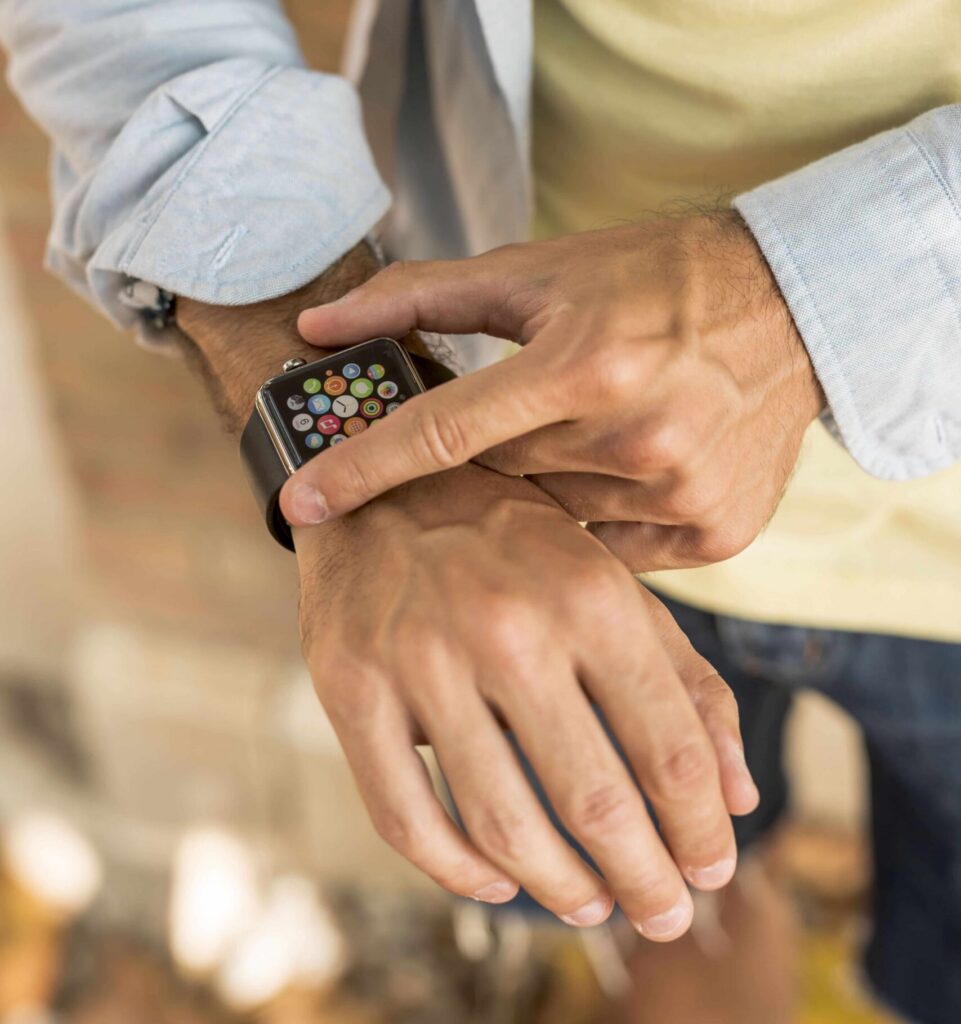
Smart Watch IoT Wearables Solution

Problem: The client was building a smartwatch with sensor-equipped removable straps on Qualcomm’s new Snapdragon Wear 5100 and needed both the embedded software and a dependable way to verify every unit on the assembly line, with a team ready fast.

Solution: CHI staffed a C++ team within two weeks and took on the embedded work across Android/AOSP and Embedded Linux, the on-device diagnostics, and the manufacturing-test tooling. The factory-verification app runs combinations of hardware and software test flows against the watch’s low-level components and reports pass or fail in a form line testers can read at a glance. Stack: C/C++, Embedded Linux, AOSP, Java, Kotlin, MCU.

Result: A stable multi-platform prototype in testing, with factory verification the manufacturing team uses to check critical components and operational flows. The partnership has run since early 2022.

banner-image

Mobile IoT Solution for Greenhouses

Problem: An urban vertical-farming startup wanted a greenhouse that mostly runs itself, controllable on site and from a phone. What they lacked was an in-house embedded team to build the hardware-facing layer.

Solution: We took the whole stack as a single vendor. It started with a custom control board carrying internal interfaces for a range of sensors, followed by the C++ firmware that drives its power sockets and reads those sensors, switching devices on and off by time or by condition. On top sit the Android app, a custom tablet app that pairs directly with the board, and a real-time backend that keeps every device in sync.

Result: A greenhouse that runs locally and remotely, with one team owning everything from board firmware to UI. The usual integration gaps between hardware, device, and app never opened up.

banner-image

RRH Controlling Software Development

Problem: The client builds Remote Radio Unit transceivers that convert between wireless and wireline signals, and wanted to shorten how long each new radio configuration takes to develop and ship as standards move toward 5G. The constraint was talent: senior embedded engineers who could also maintain legacy code and overlap US working hours.

Solution: CHI supplied C/C++ engineers with hands-on embedded and legacy-support experience who develop and maintain the RRH controlling software in Linux user space, driving the radio hardware through NETCONF and YANG data models with multithreaded, client-server logic.

Result: A platform that lets the client’s own customers adopt evolving radio technologies, including 5G, with shorter time-to-market and time-to-revenue.

banner-image
banner-image

High-risk embedded AI in healthcare and automotive systems requires deterministic behavior, audit trails, and EU AI Act compliance built into the firmware architecture from the start.

See How Compliance Gets Built Into Firmware Design

Our Firmware Development Process

Hardware and Requirements Analysis

We read the schematic and datasheets, then agree on timing, memory, and power targets in writing before a line of code exists. Guessing at requirements is the most expensive habit in embedded work.

Firmware Architecture and Technical Design

We define the layering, the HAL boundary, and the update strategy up front, so the design survives the hardware changes that always come later.

Firmware Development and Integration

We write in short, reviewed increments and integrate early against real hardware. Bugs found on the bench in week two are cheap; bugs found in the field are not.

Testing and Validation

Unit tests, integration tests, and hardware-in-the-loop runs verify behavior on actual devices. Hardware validation here is what protects system stability once the fleet grows.

Deployment and Production Handoff

We prepare manufacturing images, provisioning flows, and OTA infrastructure, with documentation your production line can follow without having to call us.

Post-Launch Support

Field devices reveal edge cases no lab can. We stay on for monitoring, patch releases, and the next hardware revision when it arrives.

Our Awards and Certifications

iso 27001-2015
iso 9001-2015
logo-img
logo-img
ai excellence award
clutch logo
microsoft-partner
aws certified
aws

Why Choose CHI Software for Firmware Development

Choosing an external firmware team is really a bet on whether they will hand you back a codebase you can own. Here is where a firmware development service provider earns that trust:

checkbox-reengineering

Hardware and Software Expertise

Both sides of the connector are covered. Engineers can debug a signal on the scope in the morning and design the cloud pipeline it feeds in the afternoon, helping firmware integrate cleanly with the systems around it.

checkbox-reengineering

Experience Across the Embedded Product Lifecycle

Experience spans the full journey, from a napkin sketch to a fielded, four-revision product. This breadth helps identify technical debt before it becomes a problem several revisions down the road.

checkbox-reengineering

Flexible Engagement Models

Support scales from a single specialist to a full team, depending on project needs. Fixed-scope pilots work well for quick validation and testing, while ongoing squads support continuous product evolution. Each engagement is shaped around the project’s requirements and resources.

checkbox-reengineering

Knowledge Transfer and IP Ownership

You own the source code, the toolchain, and the decisions. Every one of our projects that leaves our firmware development agency is delivered with an architecture decision record, handover documents, and comprehensive knowledge transfer to help your internal teams successfully develop and manage the product independently. If you’d prefer an in-house solution instead, we can also help you find and hire embedded engineers and set up your practice.

banner-image

Full source code ownership, architecture decision records, and documented handoff are part of every engagement, not a negotiation at the end of the project.

Discuss Your Firmware Requirements
albert

The CHI Software team successfully developed upgraded versions of the company's products with new functionalities and features. Thanks to these contributions, the company was able to increase its number of platform users and deepen the level of their engagement.

Salman Eskandari
Salman Eskandari

Founder at Albert AB

BTO

CHI Software Team were involved in the whole SDLC, including design development, implementation and maintenance of new and/or existing application systems. We had an excellent experience working with them so far.

Sylvain Thiebaut
Sylvain Thiebaut

CTO at BetterTradeOffPteLtd

testimonial-logo

CHI Software played a crucial role in optimizing our mobile application, ensuring seamless functionality across iOS and Android platforms. Initially brought in for a short-term fix, their expertise quickly became indispensable as they resolved critical publishing issues, modernized outdated libraries, and enhanced navigation. Their proactive approach in identifying and fixing hidden flaws significantly improved app stability and usability. CHI Software’s adaptability, deep technical knowledge, and ability to streamline a previously fragmented system have made them a trusted technology partner in this project’s success.

testimonial-photo
Nick Valstar

Lead Data Engineer at Cefetra Group B.V.

NDA

We have been working with CHI Software for several years and have always had a very positive experience. Their team is reliable, responsive, and quick to understand our needs, which is especially important when we have urgent or challenging hiring needs. I really appreciate how easy they are to work with, their flexibility, and how quickly they respond and adapt when priorities change. CHI Software has been a great partner for us, and we look forward to continuing our cooperation.

Katsiaryna Rudz
Katsiaryna Rudz

Recruitment Team Lead at Company NDA

NDA

We have an in-house technical team but we needed a partner who could perform development in fields that we couldn’t cover. CHI Software has designed and developed an iOS and Android app, including its server backend and the site crawler it uses — it’s a big part of our system. They took the solution from an MVP to its final stage. We’ve been very satisfied with the team, they are very good in terms of planning, project management and customer care.

democra
Michael Tanfilov

CEO at Democra.C

testimonial-logo

CHI Software supported us in developing several innovative products, including an AI-driven scientific research platform, a stock market analytics application, and automation solutions for business operations. The team delivered new product modules, improved platform performance, and helped establish scalable technical foundations. Their expertise in AI, cloud technologies, and modern software development made them a reliable partner for complex projects.

testimonial-photo
Yevgen Borysenko

Chief Executive Officer at Digis

testimonial-logo

At Imagine Learning, we highly value our collaboration with CHI Software. Their skilled AI and generative AI engineers have significantly enhanced our K–12 education solutions.

With CHI Software’s help, we have developed tools for providing feedback on student writing, mechanisms to create learning content based on reading education strategies, and a series of chatbots that provide efficient and accurate information access for our teams. Their ability to deliver specialized applications swiftly demonstrates their agility.

testimonial-photo
Jason Fournier

VP, Product Management, AI Initiatives at Imagine Learning

Firmware Development Services FAQ

  • What is included in firmware development services?

    arrow

    An end-to-end engagement includes requirements, architecture, development of both driver and application code, connectivity, secure boot, testing on target hardware, production transition, and finally production support. Or perhaps you just need a piece of the puzzle, like bring-up, or an OTA update path.

  • How much does firmware development cost?

    arrow

    Cost tracks with the required scope, silicon, and certification. A narrowly defined bring-up or driver project is orders of magnitude cheaper than a safety-certified medical device. So we first put together a fixed-price pilot, and you’ll have solid numbers before you’re on the hook for the full build.

  • What is the difference between firmware and embedded software?

    arrow

    Firmware is the low-level code that talks directly to hardware registers and boots the device. Embedded software is the broader application layer running on top. We do both, and you can read more about our embedded software development services on our page.

  • Can you develop firmware for our existing hardware?

    arrow

    Yes. We verify the hardware in your schematic and datasheets, bring up your board, and write driver code for it. We account for silicon constraints when they’re fixed by designing around them instead of making you respin the board.

  • Can you take over and modernize existing firmware?

    arrow

    On an ongoing basis. We assess the legacy code, extract the delicate bits and pieces, and port the firmware to a new chip or to the OTA architecture, keeping the working portion untouched.

  • How long does firmware development take?

    arrow

    A driver bring-up task can take anywhere from a couple of weeks to months, depending on whether it’s for a fully certified, supported product. After our requirement review, you get a milestone schedule with real dates, because a firmware development company should commit to a date, not a broad range.