

RRH Controlling Software Development
Our client is a manufacturing solutions provider with over 260,000 employees across 100 locations in 30 countries. One of the client's divisions needed to develop embedded software to maintain, calibrate

Embedded products often fail due to thermal issues, timing bugs, or network noise that code reviews never catch. CHI Software helps you hire embedded engineers who master low-level hardware interactions to write clean, reliable production code for your stack.
Embedded products fail in the field for reasons that never show up in a code review: a driver that misbehaves under thermal stress, a firmware timing bug that only appears at production volume, a device that drops its connection when the network gets noisy. Fixing those problems takes engineers who work close to the hardware and understand the whole software development lifecycle, not just the application layer. CHI Software helps you hire embedded software engineers who bring that depth, matched to your hardware stack and ready to write maintainable production code.
Hiring with this skill set on the open market is a slow process. There are few specialists who combine low-level programming skills with modern connectivity and security requirements, and making the wrong choice when hiring staff is costly, as mistakes are often only discovered too late. Our model is different. You hire embedded software developers who have already been technically vetted on real-world tasks in this field, and you retain direct control over how they work within your team. Every embedded software engineer you hire through CHI is hand-picked to suit your hardware, rather than being selected from a general pool.
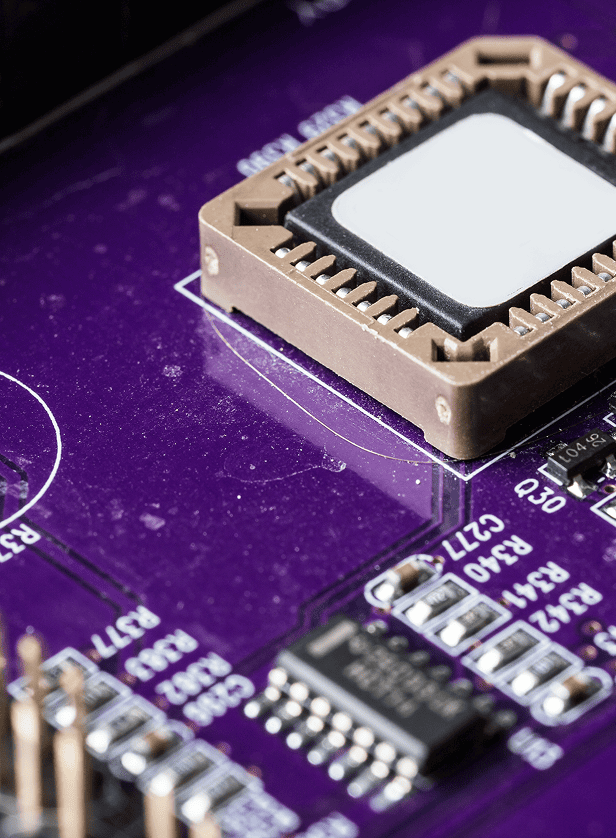
Each of the engineers listed below has not only written code for embedded systems but has also brought finished products to market. These are typical profiles from our database. When you specify your technology stack, we match you with engineers whose knowledge of hardware and specialisms best meet your requirements.




Embedded engineers with both low-level C/C++ depth and production AI integration experience are rare on the open market. Pre-vetted profiles matched to your hardware stack cut the search from months to days.
Browse Engineer ProfilesStaff augmentation solves a specific problem for engineering leaders: you have a delivery milestone and a hiring constraint at the same time. Maybe a headcount freeze, maybe a niche skill your team lacks in-house, maybe a six-month project that does not justify a permanent hire. You add the exact embedded capacity you need (with the relevant technical skills and engineering expertise), the engineers work inside your process and report to you, and you scale the team back down when the work is done. When a milestone calls for scarce skills, you hire embedded systems experts for exactly as long as you need them.
When you hire embedded engineers through CHI, you are extending your own team, not handing the work to a separate agency that hides behind a project manager.
Generalists who own the full stack, from firmware up to the application layer. They handle board bring-up, driver work, RTOS integration, and testing, and they write code your own engineers can maintain after the engagement ends.
These are engineers specializing in the development of bare-metal software, as well as RTOS-based software for microcontrollers and microprocessors. They also work at the register level, optimizing performance to meet real-time requirements. And, of course, they manage the size of the software.
Engineers who develop and maintain embedded Linux platforms using Yocto and custom BSPs. They are responsible for configuring the kernel, working with the device tree and ensuring Linux compatibility with your hardware.
These are the engineers who develop integrated connectivity solutions. In other words, they work on the embedded software for sensors, communication protocols, secure connectivity and the interaction between the device and its cloud service.
Our engineers cover the full range of embedded work, whether you are building a new product or modernizing one that has been in the field for years. Older embedded devices carry real technical debt: undocumented firmware, drivers written for chips that are now end-of-life, code that no current team member fully understands. We treat modernization as carefully as new development, and we carry out rigorous vetting procedures, because a wrong change to a shipping product is a recall risk. This work is part of our full embedded software development services.
Firmware and application software in C, C++, and Qt, built to your real-time and safety requirements from the first commit.
Introducing new boards into production: power-on testing, working with the bootloader, and the integration of microchips and software, on which the timely delivery of the product depends.
Custom drivers for sensors, displays, radios, and peripherals, written to stay stable under load and maintainable by your team later.
Full Embedded Linux platform work with Yocto: board support packages, kernel drivers, and device tree configuration for your specific hardware.
Real-time operating systems work on FreeRTOS, Zephyr, and similar RTOS platforms, with the timing analysis that hard real-time products demand.
Connected devices development across the protocols that matter: SPI, I2C, UART, CAN, Modbus, and USB, plus wireless connectivity over BLE, Bluetooth, Wi-Fi, and Zigbee.
Hardware-in-the-loop testing, JTAG debugging and low-level diagnostics, which enable the detection of synchronisation and memory errors before they reach mass production.
Working with the experience of a legacy software modernization company, we refactor legacy firmware, replace end-of-life components, and improve system performance in products that still have years of service ahead.
AI features added to embedded products without hardware-software context create latency failures and compliance gaps that surface only in production. Engineers who understand both layers prevent that from the start.
Match Engineers to Your Hardware Stack| Programming | C, C++, Python, Rust, assembly |
| Operating systems | Embedded Linux, FreeRTOS, Zephyr, bare-metal |
| Hardware platforms | STM32, ARM Cortex-M and Cortex-A, ESP32, NXP i.MX, Nordic |
| Build and BSP | Yocto, Buildroot, board support packages, device trees |
| Wired protocols | SPI, I2C, UART, CAN, Modbus, USB |
| Wireless connectivity | BLE, Bluetooth, Wi-Fi, Zigbee, LoRa |
| Debugging and test | JTAG, SWD, logic analyzer work, hardware-in-the-loop testing |
| AI | Google LiteRT (TF Lite Micro), CMSIS-NN, Edge Impulse, ONNX Runtime Micro |
| Security | Secure boot, encrypted storage, firmware signing |
| Industries | Automotive, healthcare, medical devices, consumer electronics, industrial automation, robotics, aerospace |
One specialist, matched to your stack, working only on your product. The fastest way to fill a specific skill gap without a permanent hire, and the simplest hiring model to start with. This is how most teams begin when they hire dedicated embedded engineers for a single hard problem.
Team extension for existing groups that need more hands or a missing skill. This is the usual way clients hire embedded software developers to reinforce an in-house team. The added engineers sit inside your sprints, your standups, and your codebase. Useful during hiring freezes and peak delivery periods.
Sometimes, one embedded software engineer for hire is not enough. A dedicated team to carry out a specific scope of work: launching a new product range, platform redevelopment, or a modernization program. You are provided with a team that already works seamlessly together and whose size meets your requirements. Team scaling is available.
When developing a product from scratch or a new range of hardware, we put together a full team covering the following areas: embedded software, Linux, connectivity and quality assurance, and we help to expand this team as the product develops.

We match on your actual MCU, RTOS, protocols, and domain, not on generic embedded experience. An engineer who knows STM32 and CAN is not interchangeable with one who knows Linux on i.MX. The matching process is carried out based entirely on your needs.

Our hardware developers and software engineers work at the interface between microchips and code – precisely where embedded projects usually hit a snag. This integrated approach reduces debugging time and ensures that deadlines are met.

Access to your firmware codebase and hardware platform is governed by an NDA and clearly defined intellectual property rights from the outset. You retain ownership of the source code and intellectual property. Secure development is an integral part of the standard process, not an optional extra. AI systems embedded in medical diagnostics and automotive products fall under the EU AI Act’s high-risk classification (Article 6). This means audit trails, human oversight, risk management, and technical documentation must be built into the firmware architecture from the earliest design stages.

Our engagement model is simple – you talk to the engineers directly. There is no middleman, such as a client relations manager, between you and the people writing your code. You have direct access to information about the progress of the work, any obstacles and the decisions that have been made. Every engagement concludes with architecture decision records and documented handoff, so your team owns and maintains the firmware independently after the engagement ends.
Access to your firmware codebase and hardware platform requires more than low-level programming skills. Every engineer is screened for production safety, maintainable code standards, and IP handling before the first technical interview.
See the Technical Screening ProcessWe start with the profile: real project history, the hardware and RTOS platforms an engineer has actually shipped, and evidence of maintainable work rather than one-off hacks.
A practical analysis of the fundamentals of embedded programming: memory management, interrupts, parallelism, as well as C/C++ programming practices that distinguish reliable embedded software from vulnerable software.
Systems-level thinking: familiarisation with technical specifications, debugging at the ‘hardware–software’ interface, and analysis of how synchronization decisions in embedded software affect the operation of the actual microchip.
A real-time technical interview with experienced embedded systems engineers, during which the main focus is on how the candidate analyses a problem, rather than whether they have memorized the API.
We assess whether an engineer is able to explain technical solutions clearly and identify technical debt in good time, before it accumulates. An engineer who lacks communication skills poses a risk to a distributed team.
Tell us about your microcontroller (MCU) system, real-time operating system (RTOS), protocols, implementation timelines and the skills gaps you are looking to fill. The more specific your description of the stack, the better the candidate selection will be.
You will receive profiles that match your tech stack, usually within a few days. Each CV has already passed the technical screening process.
Interview the matched engineers yourself. You decide who joins. No one is assigned without your sign-off.
Controlled onboarding into your codebase, your tools, and your process. Engineers integrate with your existing engineering workflow and start delivering against your milestones.
Our client is a manufacturing solutions provider with over 260,000 employees across 100 locations in 30 countries. One of the client's divisions needed to develop embedded software to maintain, calibrate
Our client is a famous provider of smart air conditioning solutions for homes and commercial premises.

Our client is an American multinational social technology company. It builds applications and technologies that help people connect, find communities of interest, and also grow businesses.

We have an in-house technical team but we needed a partner who could perform development in fields that we couldn’t cover. CHI Software has designed and developed an iOS and Android app, including its server backend and the site crawler it uses — it’s a big part of our system. They took the solution from an MVP to its final stage. We’ve been very satisfied with the team, they are very good in terms of planning, project management and customer care.

CEO at Democra.C

CHI Software played a crucial role in optimizing our mobile application, ensuring seamless functionality across iOS and Android platforms. Initially brought in for a short-term fix, their expertise quickly became indispensable as they resolved critical publishing issues, modernized outdated libraries, and enhanced navigation. Their proactive approach in identifying and fixing hidden flaws significantly improved app stability and usability. CHI Software’s adaptability, deep technical knowledge, and ability to streamline a previously fragmented system have made them a trusted technology partner in this project’s success.

Lead Data Engineer at Cefetra Group B.V.
I approached CHI Software with the task of creating a plugin for Google Chrome. The team did a great job and made a tool for analyzing content that is entered into the search bar.
I have been impressed with CHI Software’s understanding of concepts and the development process as a whole. I want to express my gratitude and look forward to using them again soon!

Head of Legal at Multi-National Tech Company

We needed to transfer a bank of services from IBM to Amazon for about 10 partially interconnected products. Also, we required databases and outdated products to be refactored. CHI Software provided us with a dedicated team for each product. The logic layers were rewritten for Amazon and managed by CHI experts in non-practical databases. The development ran smoothly, and we are more than satisfied with the work done.

Big Data Technical Leader at NAYA Technologies

On our request, CHI Software developed a basic AI Assistant, designed to enhance our business operations with a fine-tuned prompting feature. Built with Azure enterprise-grade security and OpenAI technology, this solution is poised to improve customer engagement and operational efficiency as we prepare to launch.
Having been our trusted partner for previous projects, CHI Software has now solidified its position as an even more indispensable ally, delivering innovation and expertise that exceed expectations.

Founder & CEO at Morphais

Media Markt worked with CHI Software for over 4 years. During this time the CHI team made important contributions to our e-commerce projects and to one of our core proprietary technologies in the area of distributed data synchronization. Alongside outstanding technical skills, these engineers have always been highly reliable in terms of quality and deadlines. Taking into consideration my experience, I would highly recommend working with the CHISW engineering team.

Solution Manager at Media Markt
Not sure whether your product needs one specialist or a dedicated embedded team? Share your MCU, RTOS, and delivery timeline and we will map the right engagement model before any commitment.
Describe Your Stack and Get Matched
Most recruitment processes take a matter of days rather than weeks. As soon as you provide details of your team and requirements, we will send you pre-screened profiles that already meet your criteria; any delay is therefore down to your interview schedule, not our candidate search.
They overlap. A firmware engineer usually works closest to the metal: bare-metal or RTOS code on microcontrollers, register-level work, timing. An embedded software engineer often covers a wider span, from firmware up to application logic and connectivity on Embedded Linux. When you hire embedded systems engineers for a project, we match to the layer you actually need.
Yes. Most of our work happens inside existing products: legacy firmware, custom boards, and codebases with years of history. We match engineers who have shipped on hardware like yours and can read an unfamiliar codebase without breaking it.
Yes. Matching is stack-first. If you need someone with STM32 and FreeRTOS, or i.MX and Embedded Linux, that is the filter we start with. You can also hire embedded systems developers with specific domain experience, such as automotive or medical.
Yes. Team extension is the most common model. Engineers join your sprints, tools, and processes and report to your leads. If you would rather hire embedded programmers for an isolated workstream, that works too.
It’s you. Yes, you hire embedded developers. But the intellectual property rights and rights to the source code are transferred to you, as set out in the contract from the outset. Non-disclosure agreements are in place throughout the process, and secure development practices are followed.

About cookies on this site