According to research, the global digital transformation market was valued at around USD 1,070 billion in 2024 and is projected to reach approximately USD 4,617 billion by 2030, with a strong compound annual growth rate of 28.5% from 2025 to 2030. This ongoing expansion reflects how businesses of all sizes are investing in modernization, cloud migration, automation, and other digital solutions to stay competitive.
In this environment, choosing the right digital transformation partner matters: a team that understands existing systems, supports practical change, and delivers steady progress can help organizations move forward without unnecessary complexity.
In this article, we take a closer look at digital transformation firms that help businesses modernize step by step through working with existing systems, aligning technology with business needs, and keeping change manageable.
Key Tips to Choose a Digital Transformation Company
When working with digital transformation companies, businesses often look for clarity and predictability. A good partner helps simplify change, not make it heavier or harder to manage.
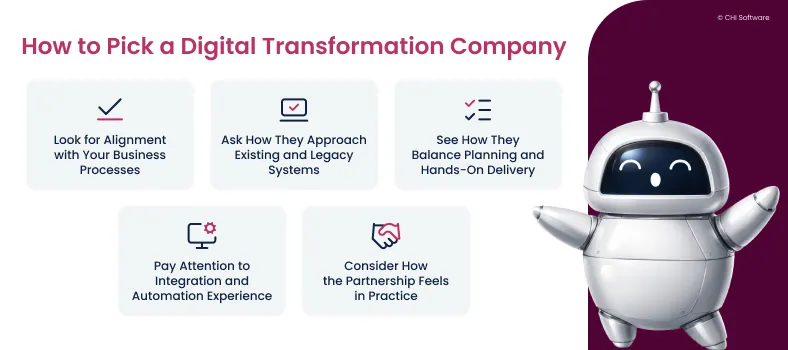
These five tips provide a solid foundation for choosing the right digital transformation agencies.
1. Look for Alignment With Your Business Processes
Experienced digital transformation firms take time to understand how a business operates day to day by studying your internal processes and friction points before suggesting digital solutions. Data migration, automation, or AI implementation tend to work best when aligned with a realistic digital strategy rather than abstract plans.
2. Ask How They Approach Existing and Legacy Systems
Many modernization projects start with platforms that are already in use. Digital transformation service providers should feel comfortable working with legacy systems and modernizing them incrementally. A thoughtful approach to business modernization helps companies avoid disruption while systems gradually evolve.
3. See How They Balance Planning and Hands-On Delivery
A reliable digital transformation consulting firm combines practical advice with direct execution. Design decisions, technical choices, and cloud transformation efforts should translate into visible progress. Vendors who clearly explain trade-offs often make collaboration with clients smoother.
4. Pay Attention to Integration and Automation Experience
Digital transformation agencies frequently work across multiple tools and systems. Familiarity with integrations, data flows, and business process automation helps keep operations connected. Clear structure at this level supports long-term IT transformation without unnecessary complexity.
5. Consider How the Partnership Feels in Practice
Digital transformation services companies usually stay involved beyond a single phase. For businesses, a comfortable working relationship matters. Managers and engineers who communicate openly, adapt to feedback, and collaborate well with internal developers often deliver better outcomes over time.
With these considerations in mind, the companies below represent a range of transformation approaches. Each offers different expertise, team structures, and delivery styles, giving you several solid options depending on your goals and project scope.
Best Digital Transformation Companies to Consider
Each service provider listed below brings its own mix of technical expertise, consulting depth, and delivery style, which matters when choosing a partner for well-planned business modernization. This list works best as a starting point — narrowing it down to a few options helps make the first conversation more focused.
Intellias
- Founded: 2002.
- Core expertise: Enterprise software, cloud enablement, digital consulting, data platforms.
- Client focus: Enterprises, global tech companies.
- Strengths: Strong architectural thinking, industry-specific expertise, reliable large-scale delivery.
- Key differentiator: Ability to support multi-year transformation programs across several business units.
- Hourly rates: USD 50–USD 99.
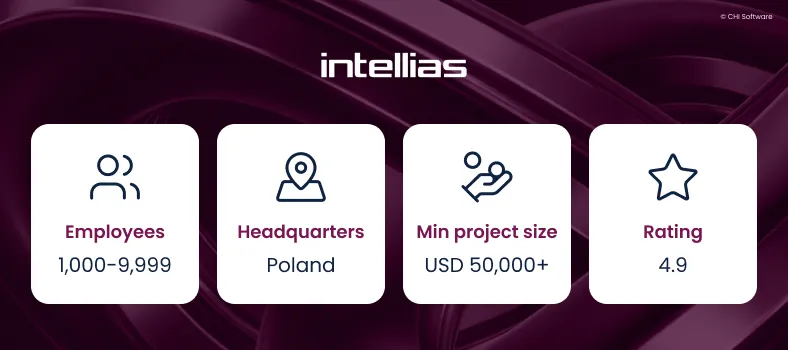
Intellias works with companies that have complex ecosystems and many internal dependencies. Their engineers bring a consulting-driven approach, paying close attention to architecture, governance, and long-term scalability.
As a digital transformation firm with a strong network of global partners, Intellias often supports complex enterprise transformation initiatives across distributed teams. Intellias tends to work confidently in regulated industries and is comfortable with projects that require multiple teams to coordinate around a shared roadmap.
Devox Software
- Founded: 2018.
- Core expertise: Cloud development, DevOps, backend engineering, modernization.
- Client focus: SMEs, scale-ups, fast-growing digital businesses.
- Strengths: Flexible engagement models, quick onboarding, practical engineering.
- Key differentiator: Ability to reinforce in-house teams during active transformation phases.
- Hourly rates: USD 50–USD 99
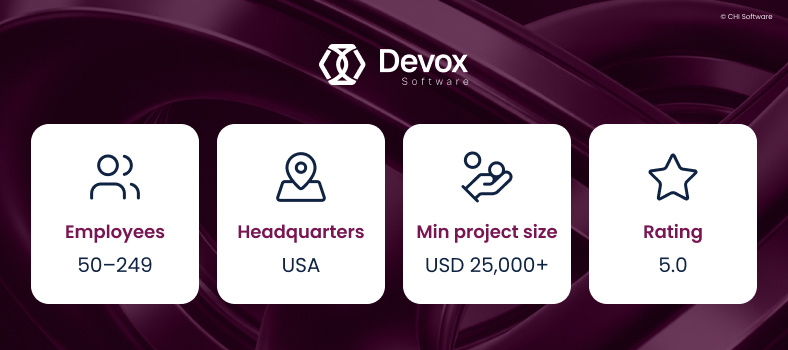
Devox Software supports companies that need additional engineering capacity during active transformation. Their engineers help untangle monolithic systems, introduce DevOps practices, and prepare businesses for cloud migration.
This digital transformation company keeps communication simple and delivers predictable iteration cycles, which works well for organizations that need steady progress without expanding their internal team too quickly.
ModLogix
- Founded: 2014.
- Core expertise: Legacy modernization, system migration, architecture redesign.
- Client focus: SMEs, mid-market companies, organizations with outdated systems.
- Strengths: Deep legacy reverse-engineering expertise.
- Key differentiator: Focus on upgrading or rewriting old software while preserving business continuity.
- Hourly rates: USD 25–USD 49.
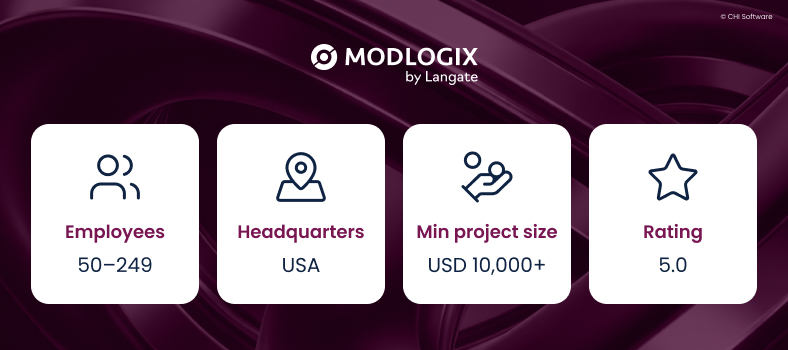
ModLogix specializes in the part of digital transformation that most companies fear — dealing with old, fragile systems. Their engineers excel at analyzing legacy code, uncovering hidden dependencies, and designing safe paths toward modernization.
For organizations that cannot afford downtime or the risks of a “big bang” rewrite, ModLogix offers a slow, controlled, and methodical migration path.
N-iX
- Founded: 2002.
- Core expertise: Cloud solutions, enterprise engineering, data analytics, consulting.
- Client focus: Enterprises and large-scale digital companies.
- Strengths: Mature engineering processes, broad tech expertise, strong cloud partnerships.
- Key differentiator: Ability to run parallel workstreams across data, cloud, and modernization.
- Hourly Rates: USD 50–USD 99.
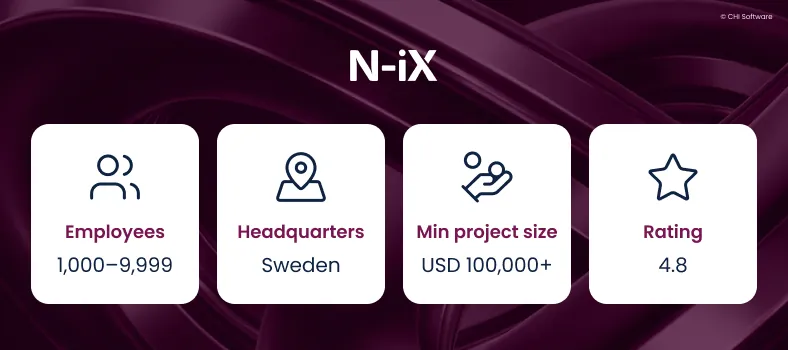
N-iX is known for its ability to handle transformation programs with many moving parts. As a digital transformation consulting firm, the company invests heavily in data and cloud expertise, enabling clients to restructure systems, streamline processes, and adopt more flexible architectures.
Their delivery approach suits organizations that require stable execution and transparent coordination across several product or infrastructure departments. With delivery teams in the USA and Europe, the company operates as both a technology provider and a digital transformation agency for large, distributed organizations.
CHI Software
- Founded: 2006.
- Core expertise: Cloud transformation, AI/ML, enterprise modernization, data engineering.
- Client focus: Mid-sized companies, startups & scaleups, tech-driven SMEs.
- Strengths: Deep legacy modernization experience, strong AI/ML practice, scalable cloud architectures.
- Key differentiator: Ability to combine modernization, data strategy, cloud migration, and product development under one long-term transformation program.
- Digital transformation projects:
- Financial software modernization;
- Legacy trading platform modernization;
- Leasing platform modernization.
- Hourly Rates: USD 50–USD 99.

CHI Software approaches digital transformation as a structured, long-horizon partnership rather than a series of disconnected technical tasks. Their engineers work across cloud, data, software modernization, and AI — the four pillars that usually determine whether a transformation succeeds.
One of the company’s strengths lies in working with complex, aging infrastructures and gradually turning them into cloud-ready systems without disrupting core business operations.
Their engineers and solution architects often help clients redefine processes, automate decision-making, introduce analytics, and shift products to event-driven or service-based architectures. CHI Software tends to work best with organizations ready for measurable, long-term change rather than short-term feature refreshes, offering a calm, systematic approach to projects that span multiple departments.
Oski Solutions
- Founded: 2019.
- Core expertise: Product engineering, cloud solutions, custom software.
- Client focus: Startups, SMEs, digital-first businesses.
- Strengths: Hands-on engineering teams, clean delivery, pragmatic tech choices.
- Key differentiator: Ability to simplify transformation initiatives and cut unnecessary complexity.
- Hourly rates: USD 25–USD 49.
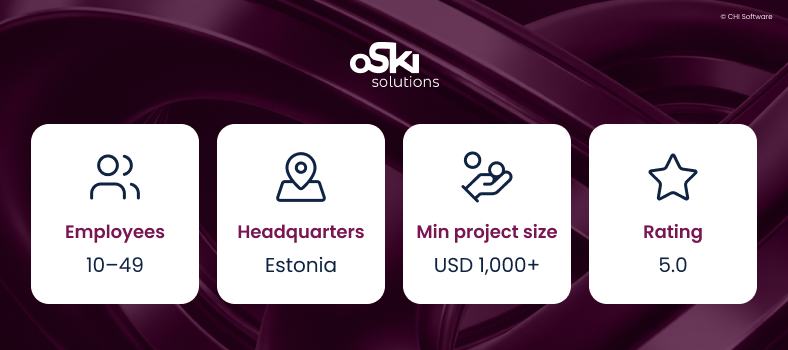
Oski is among those digital transformation providers that focus on making changes manageable. Their engineers prefer lean architectures, gradual rollout, and clean implementation.
The company works well with organizations that want to modernize but don’t need heavy consulting layers — just a dependable team that can move a product and infrastructure forward without over-engineering.
A-Listware
- Founded: 2017.
- Core expertise: Software engineering, distributed teams, cloud development.
- Client focus: SMEs, scale-ups, engineering-heavy organizations.
- Strengths: Experienced senior developers, strong distributed team management.
- Key differentiator: Ability to build hybrid teams that extend a client’s engineering capabilities.
- Hourly Rates: USD 25–USD 49.
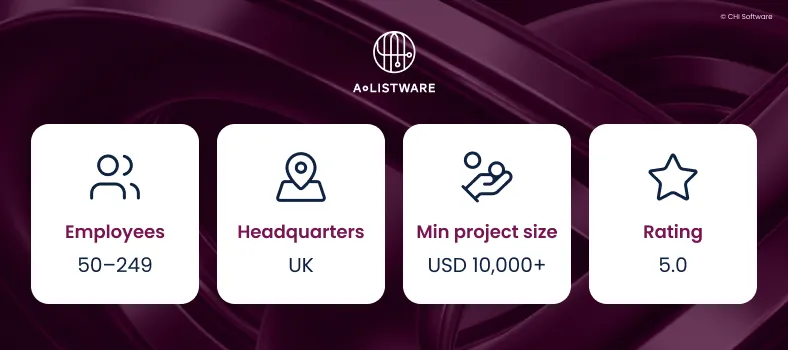
A-Listware helps companies expand engineering capacity during the most intense phases of transformation. Their developers are responsible for core backend work, integrations, and cloud adoption tasks. The company’s strength lies in assembling senior-heavy teams that integrate smoothly with client processes.
A-Listware is often brought in when speed and reliability matter more than experimentation. Their specialists tend to fit well into existing delivery structures, helping clients move faster without forcing process changes or unnecessary tooling shifts.
BitCot
- Founded: 2011.
- Core expertise: Cloud-native development, mobile platforms, system modernization.
- Client focus: SMEs, early-stage enterprises, digital product businesses.
- Strengths: Fast delivery cycles, strong mobile background.
- Key differentiator: Good balance between speed and long-term maintainability.
- Hourly rates: USD 25–USD 49.
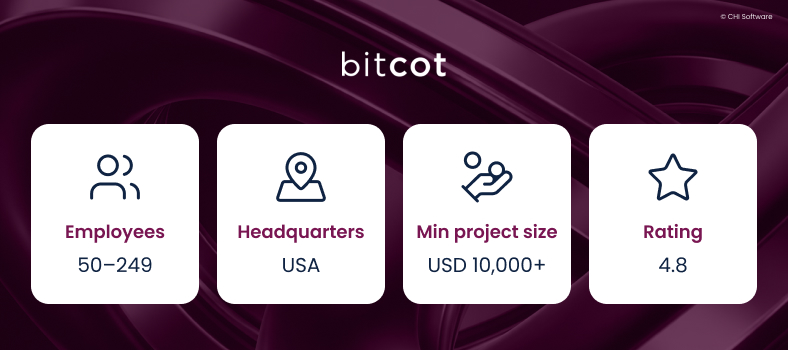
BitCot works with companies that aim to modernize customer-facing systems first, a common focus among digital transformation consulting companies. Their team helps redesign outdated mobile or web interfaces while gradually refactoring the backend. Their delivery style is flexible and suits organizations that want visible transformation wins early in the project.
Euvic
- Founded: 2005.
- Core expertise: Enterprise development, managed IT, cloud platforms, automation.
- Client focus: Enterprises, public sector, corporate digital units.
- Strengths: Very broad service line, strong governance structure.
- Key differentiator: End-to-end digital transformation across IT, business processes, and automation.
- Hourly rates: USD 50–USD 99.
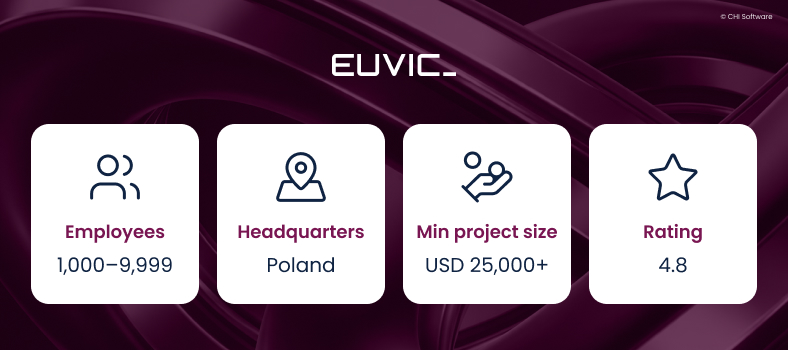
Euvic works at the intersection of technology and operations. Their strength lies in orchestrating large-scale transformation where many departments, legacy systems, and business processes must evolve together. They combine engineering, IT operations, and consulting into unified delivery streams.
In transformation projects, Euvic often serves as a coordinator rather than just a delivery vendor. They help align technical execution with operational realities, which is especially valuable when modernization affects multiple business units at once.
Blackthorn Vision
- Founded: 2009.
- Core expertise: Cloud development, AI/ML, custom platforms, modernization.
- Client focus: SMEs, mid-sized enterprises.
- Strengths: Engineering clarity, modern stack focus, strong PoC-to-product process.
- Key differentiator: Ability to turn small prototypes into scalable transformation initiatives.
- Hourly Rates: USD 25–USD 49.
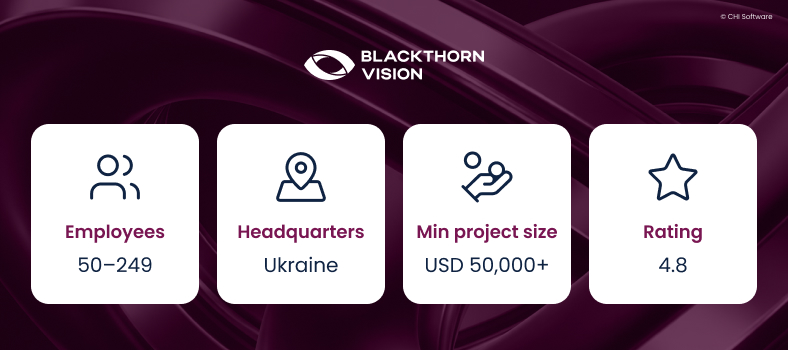
Blackthorn Vision often works with companies starting their transformation from a narrow initiative — a PoC, an analytics component, or a new automation workflow. Their engineers help turn these first steps into a structured modernization path.
Among mid-sized transformation firms, Blackthorn Vision stands out for its ability to scale early technical decisions into sustainable architectures. Their ability to structure early initiatives makes the transition from experimentation to long-term modernization feel more controlled and intentional.
Comparison Table: Top Digital Transformation Providers
| Company |
Founded |
Core Expertise |
Transformation Focus |
Client Type |
Hourly Rates, USD |
| CHI Software |
2006 |
Cloud, AI/ML, data engineering, modernization. |
Legacy modernization, cloud-native platforms, AI-driven automation. |
SMEs, enterprises. |
50–99 |
| Intellias |
2002 |
Enterprise software, cloud, digital consulting data platforms. |
Large-scale digital ecosystems, architecture redesign. |
Enterprises, global tech companies. |
50–99 |
| Devox Software |
2018 |
Cloud development, DevOps, backend engineering, modernization. |
Monolith-to-cloud migration, DevOps adoption. |
SMEs, scale-ups, fast-growing digital businesses. |
50–99 |
| ModLogix |
2014 |
Legacy modernization, system migration, architecture redesign. |
Gradual modernization of outdated systems. |
SMEs, mid-market. |
25-49 |
| N-iX |
2002 |
Cloud solutions, enterprise engineering, data analytics, consulting. |
Multi-stream transformation programs. |
Enterprises and large-scale digital companies. |
50-99 |
| Oski Solutions |
2019 |
Product engineering, cloud solutions, custom software. |
Simplified digital transformation, platform unification. |
Startups, SMEs, digital-first businesses. |
25–49 |
| A-Listware |
2017 |
Distributed engineering teams, cloud dev, software development. |
Engineering capacity for transformation. |
SMEs, scale-ups, engineering-heavy organizations. |
25–49 |
| BitCot |
2011 |
Cloud-native dev, mobile platforms, system modernization. |
Customer-facing system modernization. |
SMEs, early-stage enterprises, digital product businesses. |
25–49 |
| Euvic |
2005 |
Enterprise IT, cloud, automation. |
End-to-end organizational transformation. |
Enterprises, public sector, corporate digital units. |
50–99 |
| Blackthorn Vision |
2009 |
Cloud, AI/ML, custom platforms, modernization. |
PoC-to-scale transformation initiatives. |
SMEs, mid-sized enterprises. |
25–49 |
There’s no single “best” option among digital transformation companies — the right choice depends on your goals, internal readiness, and how closely a partner aligns with your business culture and operations. Treat this list as a starting point for conversations, not a final verdict, and focus on finding a team that can support steady transformation.
Conclusion
Digital transformation rarely follows a single path, and there’s no universal formula that works for every business. What matters most is finding a partner who understands your current systems, respects real constraints, and can support modernization at a pace that makes sense for your organization.
The digital transformation providers featured in this article represent different approaches to change — from legacy system modernization to cloud migration, automation, and broader business change. Use this list as a reference point, ask the right questions, and focus on vendors that align with your goals and workflow. Steady progress and clear communication often make a bigger difference than ambitious promises.
FAQs
-
What industries benefit most from digital transformation services?

Digital transformation brings value across many sectors, but it’s especially impactful in industries where legacy systems and manual processes slow down growth:
- Manufacturing — automation, production planning, and supply chain visibility;
- Healthcare — system interoperability, data access, and operational efficiency;
- Finance and insurance — legacy system modernization, compliance, and process automation;
- Logistics — real-time tracking, integrations, and workflow optimization;
- Retail and e-commerce — platform modernization, inventory systems, and customer data.
-
How long does a digital transformation project usually take?
Timelines vary widely and depend on scope, existing systems, and internal readiness. In practice, projects often follow phased cycles:
- 3–6 months — focused initiatives (process automation, cloud migration of a single system);
- 6–12 months — platform modernization, system consolidation, and data restructuring;
- 12+ months — broader business transformation involving multiple systems and departments.
We recommend incremental delivery, allowing businesses to see results early while continuing modernization in parallel.
-
How are digital transformation consulting firms different from development agencies?
A digital transformation consulting firm focuses not only on delivery but also on direction. Experts here can help define priorities, sequence changes, and align technology decisions with business goals. Development agencies often concentrate on execution, while consulting companies combine strategy with hands-on implementation.
-
How do digital transformation service providers measure success?
Success is usually defined through practical, business-oriented indicators rather than technical milestones alone:
- Reduction in manual or repetitive processes;
- Improved system stability and performance;
- Faster delivery or release cycles;
- Better data visibility and reporting;
- Lower operational or maintenance costs;
- Improved internal workflows and collaboration.
Clear success metrics are typically agreed on before the project starts.
-
What are the common reasons digital transformation projects stall?
Digital transformation projects often slow down for practical reasons rather than technical ones. The most common blockers include:
- Unclear priorities: Businesses try to modernize too much at once without a clear sequence.
- Underestimated legacy complexity: Existing systems turn out to be more fragile or interconnected than expected.
- Lack of internal alignment: Business and technical specialists move in different directions.
- Insufficient ownership: No clear decision-makers or sponsors on the client side.
- Overly ambitious scope: Transformation goals grow faster than resources or capacity can support.
- Weak change management: Employees struggle to adapt to new processes or tools.
About the author
Ivan keeps a close eye on all engineering projects at CHI Software, making sure everything runs smoothly. The team performs at their best and always meets their deadlines under his watchful leadership. He creates a workplace where excellence and innovation thrive.
Rate this article
225 ratings, average: 4.9 out of 5