

Remote Monitoring Software: Connected Nursery
Our client is a US-based healthcare company specializing in remote monitoring systems for newborns and babies up to 4 years and those requiring constant supervision due to health problems or
The client: a leading American company specializing in translation and localization services, with operations in 26 countries and expertise in over 350 languages. The company serves various industries, including healthcare, with a focus on clinical documentation and medical translations. The CHI Software team developed an AI medical translation platform that automates preparation, extraction, alignment, and pre-translation to flag differences for review and provide managers with real-time tracking and audit trails.
The client runs a regulated translation program that spans multiple countries and languages. Every Clinical Outcome Assessment (COA) must look exactly the same in both paper and digital formats – yet their work is dependent on spreadsheets, email, and disconnected tools.
As a result, this made different versions of documents prone to falling out of sync, requiring time-consuming manual checks and slowing down audit preparation. Relevant planning and compliance steps are outlined in “How to Build a Medical Application: HealthTech Startup Guide.”
As the number of studies continued to grow, sponsors pushed for faster turnaround times in order to stem the tide of a growing backlog. To make that happen, project managers and language lead managers needed clear status visibility, role-based workflows, and a single place to keep translations and layouts synchronized. Additionally, they needed to be audit-ready at any moment, as HIPAA and GDPR regulations require full traceability and evidence that a professional linguist had reviewed every change.
Analyzing the gaps in the existing solution led to the development of a translation software for medical documents that centralizes work, integrates existing tools, and replaces spreadsheet tracking with a compliant end-to-end workflow, aligning with the practices we’ve laid out in our case study “How Big Data Analytics Are Transforming Healthcare.”
Before, teams spent tedious hours juggling endless piles of spreadsheets – now they work through a single web application that handles almost every step of the translation process. This shift freed up language leads and project managers to concentrate more on the work that matters.
Paper and electronic Clinical Outcome Assessments remain perfectly aligned in every language and region, eliminating manual edits and safeguarding data integrity. The integration of translation software for medical documents ensures accuracy across all formats.
Purpose-built tools streamlined each project phase, enabling sponsors to launch studies more quickly without compromising quality, supported by the latest methods in AI-driven medical database translation.
A translator-validated interface with role-specific workflows provides a convenient environment for linguists and lead translators, improving accuracy and reducing onboarding time. The design is optimized for clinical document translation software, ensuring smooth handling of complex and sensitive medical records.
Every translation meets strict COA standards, ensuring the reliability of clinical trial evidence and maintaining audit readiness.
Vetted Repository: A centralized storage of verified source files that have been parsed, cleaned, and aligned, with full text search and instant reuse options, is the foundation that supports translation software for the medical industry by ensuring all resources meet regulatory and quality standards.
Manual Translation Editor: A built-in workspace where linguists can create or refine translations without leaving the application, providing flexibility for specialized tasks such as AI medical report translation.
Content Cleanup and Alignment Tool: The ability to import Word, PDF, or Excel files, and automatically extract text from documents and embedded images, aligns all content in a structured table for downstream processing.
Translation Memory Integration: Direct connection to the company’s approved multilingual segments enables rapid leverage of existing AI medical text translation.
AI Assistance Suite:
– Source Key Concept Identification: AI detects and highlights core concepts, fills gaps, and applies translation technology in healthcare for accurate domain-specific results.
– Language Lead Validation: An automated review engine confirms every update against project rules and highlights discrepancies across hundreds of rows, enabling leads to approve changes in minutes – not hours.
– Screenshot Review: Computer-vision quality assurance compares client screenshots with reference layouts, checks formatting and text accuracy, and reports a pass or fail status, replacing manual visual checks with instant feedback.
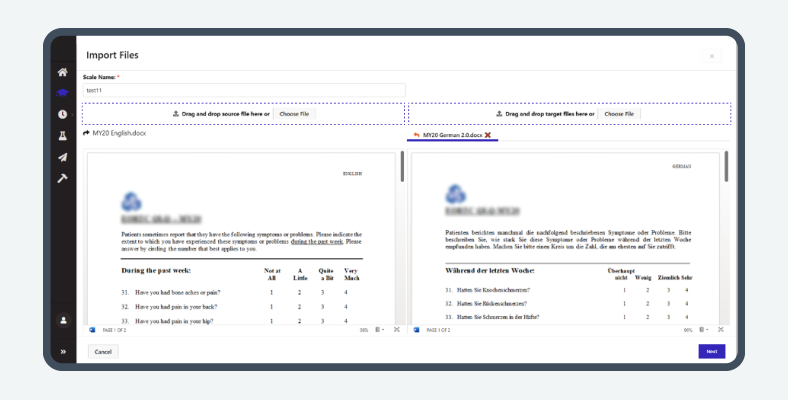

Document Preparation Automation: Early in the project, it became clear that manual document handling was slowing everything down. We decided to introduce tools for text segmentation, image text extraction, spell checking, and medical terminology validation using Azure Document Intelligence and Cognitive Services, aligning the process with the standards of medical translation software development.
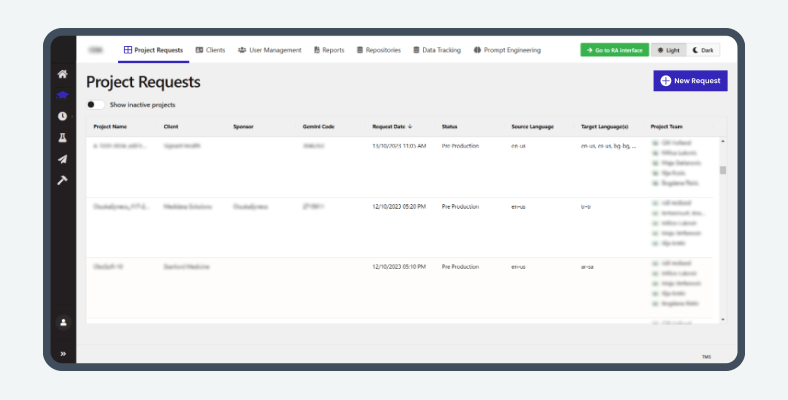
Project Management and Monitoring: Teams lacked clear visibility across stages. We added real-time task tracking with visual boards and status columns, allowing project managers and language leads to see progress at a glance.
Consistency Across Formats: Paper and electronic COAs often drifted out of sync. We automated alignment across languages and regions to keep every version identical. That safeguard relies on translation software for the medical industry and protects data integrity.
Fast Pretranslation: We recognized from the beginning that speed would be critical for meeting tight deadlines. By utilizing an existing translation memory to populate verified segments instantly, we significantly accelerated the pretranslation process. This not only reduced turnaround times but also ensured consistency and quality across all translated materials, resulting in smoother project delivery with the support of AI medical database translation.
AI-Powered Translation Workflow: Tool switching tended to slow down work. We built a single-screen workspace where lead translators can create requests, select source and target languages, and assign teams all in one step, featuring a medical terminology database and automated quality checks.
For context on how machine learning supports administrative workflows and document-heavy processes in healthcare, read our article Machine Learning in Healthcare.
External Integrations: Work stalled whenever files were moved between systems. We connected the platform with translation workspace tools, translation memory, XLIFF Editor, and Aurora AI. The pipeline now runs end-to-end without interruptions.
Data Security: Sensitive medical information requires strict protection. We have implemented GDPR and HIPAA-compliant controls, which include strong encryption, role-based access, and detailed audit logs so that data stays secure at every stage.
Year-end analysis for 2024 revealed that automation accelerated key translation stages by 5–15 times and increased gross profit margin by 25%.
Using advanced medical document translation software, each translation is reviewed by certified bilingual specialists. Multiple review stages guarantee that every clinical document is both precise and reliable – further reinforcing the credibility of the research results.
Leveraging an AI medical translation platform ensures full compliance with strict COA regulations, protects the integrity of clinical trial data, and supports successful inspections.
More than 40 interconnected steps are managed within a single AI medical translation platform development framework, eliminating manual handoffs and reducing rework.
Automation reduced deployment timelines by 60%, enabling sponsors to progress through trial phases significantly faster.
A single platform coordinates every language and format, widening trial inclusivity without adding overhead. This aligns with the latest innovations in medical translation software development, providing a scalable approach to managing complex translation demands.
Our client is a US-based healthcare company specializing in remote monitoring systems for newborns and babies up to 4 years and those requiring constant supervision due to health problems or
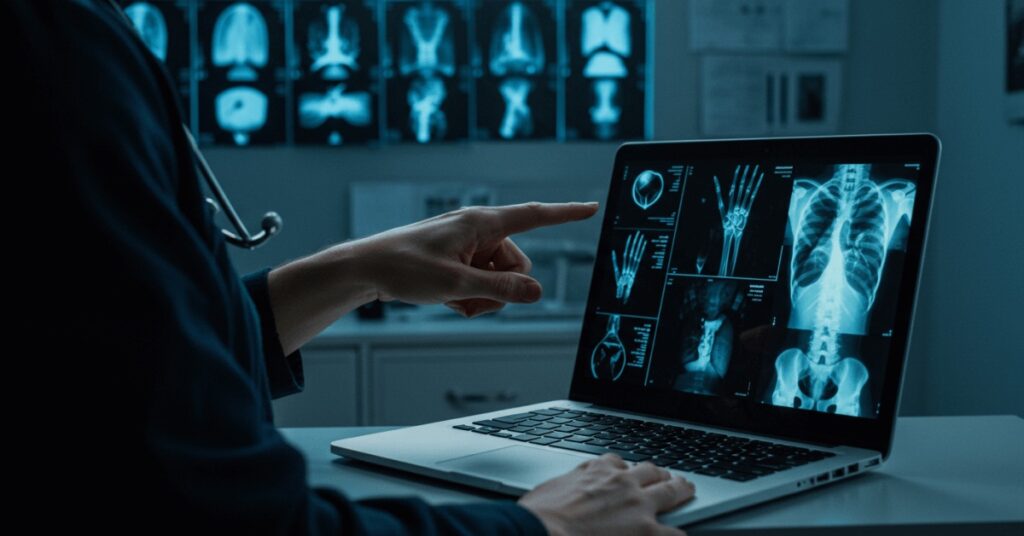
CHI Software developed an oncology diagnostics software that recommends the smallest, most cost-effective test sets; optimizing both clinical decision-making and cost efficiency for both patients and insurance companies.

Our client is a promising telemedicine startup based in Central Asia. They are committed to revolutionizing the healthcare marketplace by creating an advanced healthcare communication platform, enabling real-time video calls

About cookies on this site