NLP in Education: Applications, Implementation, and Ethical Considerations
The education sector is undergoing a profound structural shift. As educational institutions grapple with increasing administrative tasks, diverse student populations, and the demand for personalized learning, Natural Language Processing (NLP) has emerged as the definitive bridge between massive student data repositories and actionable learning outcomes.
For B2B stakeholders — from EdTech providers to university administrators — the integration of artificial intelligence is no longer a futuristic concept; it is a core operational necessity. This article explores how natural language processing NLP is redefining the educational landscape and how CHI Software serves as the strategic architect for this transformation.
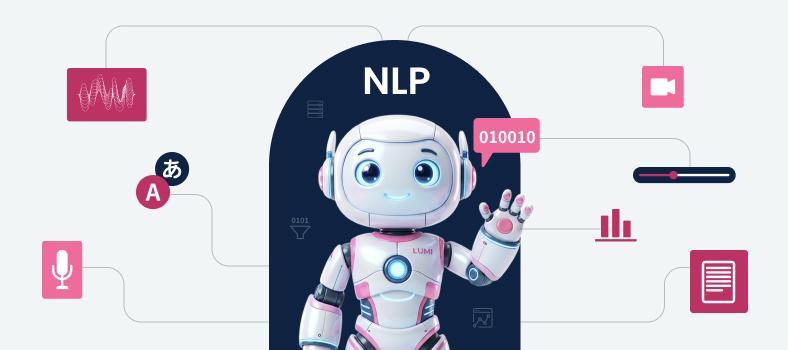
Overview of NLP in the Education Sector
Defining NLP in an Educational Context
Natural language processing is the branch of artificial intelligence that enables complex computational systems to understand, interpret, and generate human language. In educational settings, NLP in education transforms unstructured text (essays, forum posts, textbooks) and human communication into structured data that can be used to personalize learning and automate grading processes.
Primary NLP Components Used in Schools
Instead of the harmful capabilities of AI in learning, like just providing the right or wrong answer to the student, smart NLP systems can engage in conversations that will lead the young mind to find the answer themselves. Currently, schools have adopted different components of NLP systems, like:
- Sentiment Analysis: Detecting student frustration or engagement through student interactions.
- Speech Recognition: Powering language learning apps and accessibility tools.
- Language Translation: Breaking down language barriers for global online courses.
- Machine Learning: Analyzing learning patterns to predict student needs.
This comprehensive approach to literal machine learning (no pun intended) helps optimize processes, cut the time needed for studying, and improve academic scores.
Relevance to Educational Institutions
The power of education in natural language processing lies in its ability to process natural language at scale. By implementing NLP systems, schools can unlock the value of their content, shifting human educators from repetitive automated grading systems to high-value student mentorship.
Imagine if a teacher could feed their logic and knowledge to a machine that would be able to assist students wherever. This provides a continuous learning stream for students and decreases the workload of the teacher.
Key Applications: Impact and Feasibility

The integration of NLP algorithms follows a hierarchy of value. While NLP tools for administrative tasks offer high immediate feasibility, intelligent tutoring systems powered by AI provide the highest long-term impact on the learning experience.
- Administrative Automation: (High Feasibility / Medium Impact)
- Automated Assessment: (Medium Feasibility / High Impact)
- Intelligent Tutoring & Personalization: (Lower Feasibility / Exponential Impact)
Thanks to this approach, it is possible to achieve a comprehensive system that not only supports students, but also understands the complexity of learning processes, just like a teacher without the ability to replace them.
Intelligent Tutoring Systems (ITS)
Intelligent Tutoring Systems Powered by NLP
Intelligent tutoring systems act as 24/7 digital mentors. Unlike traditional software, these NLP-powered tools engage in Socratic dialogue, analyzing student responses to provide immediate feedback rather than simple binary corrections.
Mapping Conversational AI to Student Workflows
- Identifying Student Needs: After a lecture, students engage with natural language processing tools to summarize concepts. The system identifies gaps in language comprehension.
- Scaffolded Hints: Instead of providing answers, the system uses human language to offer hints based on individual learning preferences.
- Socratic Dialog: NLP in education is usually based on the 12 questions of Socratic Dialogue, which help students come up with answers themselves instead of just Googling something.
- Trusted Education Partner: Instead of relying on LLMs that are available to the public, students will rely on their own personal helper who is always present when they need them.
Data Sources for Personalization
To drive these systems, CHI Software integrates diverse data streams:
- Historical performance from educational platforms.
- Real-time logs from student interactions.
- Natural language queries that reveal learning styles.
Adaptive Learning and Curriculum Development
Adaptive Learning Systems Powered by AI
Adaptive learning systems analyze how students interact with lesson plans. If a student struggles with vocabulary usage, adaptive learning algorithms automatically adjust the difficulty or provide a contextual glossary to personalize learning experiences.
Analytics for Curriculum Development
Institutions use NLP technologies to perform gap analysis across the education market. By “reading” through thousands of pages of material, AI identifies where curriculum development is lacking or where educational experiences overlap redundantly.
Personalization Metrics to Monitor
- Concept Mastery Velocity: How quickly a student moves toward language acquisition.
- Engagement Decay: Using sentiment analysis to detect when a student’s tone in written assignments signals burnout.
Automated Assessment and Automated Essay Scoring (AES)
Automated Assessment Capabilities
Beyond multiple-choice, automated assessment can now grade written responses by comparing semantic meaning against a “gold standard” provided by human educators.
Automated Essay Scoring Requirements
To improve writing skills, automated essay scoring must evaluate:
- Coherence and Cohesion: Logical flow of human communication.
- Lexical Complexity: Sophistication of vocabulary usage and language skills.
Rubric Alignment for Model Training
A critical step in automating grading processes is aligning NLP algorithms with specific institutional rubrics. This ensures the automated grading systems value the same criteria as faculty.
Language Barriers and Support for Diverse Populations
Translation Workflows for Multilingual Learners
Language translation and speech recognition are now very important for students to learn together in a classroom. With the help of natural language processing tools, a lecture in English can be quickly. Translated into many languages at the same time.
This fast language translation helps students focus on the subject of struggling with language. It changes courses into open environments where language is not a barrier to success or participation in academic discussions.
Inclusive Learning Environment
For students with disabilities, speech recognition and NLP tools are technologies that make it easier for them to express themselves. These systems let students with motor impairments or dysgraphia dictate written responses accurately without the difficulties of typing or handwriting.
By using natural language processing in learning schools can create learning environments that are truly accessible. This change ensures that every student, regardless of their sensory challenges, can show their language skills and subject knowledge equally.
Dialect-Inclusive Training Data
To ensure AI deployment is fair we advise institutions to collect diverse datasets. Most NLP algorithms are trained on versions of a language, which can lead to bias against students who use regional dialects or specific communication styles.
Using inclusive training data helps NLP systems recognize different learning preferences and linguistic backgrounds. This approach prevents students with standard language skills from being left behind and ensures automated assessment is fair, accurate, and culturally responsive.
Administrative Tasks and Operational Efficiency

Chatbot Automations for Student Queries
- The “FAQ Bot”: Handling student queries regarding financial aid and registration.
- Scalable Tools: Using natural language processing tools to manage enrollment workflows, freeing up staff for more complex administrative tasks.
Document Parsing for Records Management
NLP technologies can automatically extract data from incoming transcripts, porting them directly into educational platforms with high accuracy.
Enhanced Student Engagement and Support
Immersive Learning Environments
By integrating NLP in education, institutions can create immersive learning environments where the boundaries between study and practice disappear. Through natural language processing tools, students receive real-time feedback on their language acquisition progress, allowing them to correct mistakes in human communication as they occur. These immersive learning experiences utilize speech recognition and natural language generation to simulate real-world conversations, ensuring that student learning is not just a passive reception of facts but an active, conversational process. This immediate loop of interaction keeps student engagement at its peak, as learners are constantly challenged by NLP-powered tools that adapt to their specific learning experience.
Sentiment Analysis for Engagement Signals
Beyond the technical accuracy of student responses, natural language processing NLP allows for the emotional monitoring of the classroom. By implementing sentiment analysis to scan the tone of student queries, forum posts, and emails, administrators can identify “Early Warning” signals of frustration, confusion, or burnout. This data-driven approach leads to enhanced student engagement by flagging at-risk individuals before they disengage from their online courses. This proactive student support model allows human educators to intervene with empathy and precision, ensuring that the educational landscape remains supportive of the emotional well-being of diverse student populations.
Implementation Strategies for Institutions
The Pilot-First Approach
A successful transition to artificial intelligence requires a strategic, tiered rollout. We advise that educational institutions never undergo a full-scale “rip and replace” of their existing infrastructure. Instead, start with a small pilot program to test how specific NLP tools impact student learning and learning outcomes within a controlled environment.
This phased approach allows for the refinement of NLP algorithms based on actual student interactions, ensuring that the technology is fine-tuned to meet specific student needs before a wider deployment across the entire organization.
Mapping Legacy Systems
The foundation of any complex computational systems integration is a thorough audit of existing infrastructure. Before deploying natural language processing, we perform a comprehensive mapping of your current educational platforms, such as the LMS or SIS.
This ensures that the underlying architecture can support high-velocity, real-time student data exchange without causing system latency. By identifying potential bottlenecks early, we ensure that natural language processing tools integrate seamlessly with your legacy software, preserving the continuity of administrative tasks while upgrading your digital capabilities.
Data Engineering and Cloud Deployment
To achieve the necessary scale for personalized learning experiences, a robust data strategy is non-negotiable. We recommend hybrid cloud models that balance the massive processing power required by natural language processing nlp with the localized security needs of educational settings.
Our data engineering workflows focus on cleaning and structuring “messy” student data, ensuring that the input for your machine learning models is accurate and compliant. This hybrid approach provides the elasticity to grow as your education market presence expands while maintaining rigid control over sensitive information.
Ethical Considerations and Compliance
Data Privacy and Ethical Considerations
In 2026, the trust between a student and their institution is paramount. Educational institutions must treat student data as a highly sensitive asset. All NLP systems implemented by CHI Software feature end-to-end encryption and advanced anonymization protocols to meet the strictest ethical considerations.
Whether it is language translation logs or written responses for a grade, every piece of data is handled in compliance with global standards like GDPR and FERPA, ensuring that the push for personalized learning never compromises individual privacy.
Auditing for Bias
One of the most critical ethical considerations in AI is the elimination of “algorithmic prejudice.” NLP algorithms must be regularly and rigorously audited to ensure they do not inadvertently favor certain learning styles, socioeconomic backgrounds, or demographics during automated assessment.
We implement continuous bias-detection loops that compare automated grading systems against a diverse set of human educators’ evaluations. This ensures that writing skills and language skills are judged on merit alone, fostering a truly inclusive learning environment for all.
AI Literacy and Explainability
For AI to be a trusted partner in the classroom, it must be transparent. We implement “Explainable AI” (XAI) layers within our automated essay scoring and automated assessment modules. This means that when a system provides detailed feedback, it doesn’t just issue a score; it highlights the specific linguistic patterns and vocabulary usage that led to that conclusion.
This focus on explainability builds ai literacy among both students and faculty, transforming the AI from a “black box” into a collaborative tool that helps everyone understand the path toward better learning outcomes.
Measuring Impact and ROI
KPIs for Learning Outcomes
- Learning Outcomes: Improvement in scores for language skills and writing skills.
- Administrative Savings: Man-hours saved by automating grading processes.
- Engagement Uplift: Measured via student interactions and participation in online courses.
Partnering With CHI Software
Implementing NLP in education requires a deep understanding of pedagogical workflows. CHI Software provides the expertise to turn complex computational systems into seamless educational experiences.
Our Core Offerings:
- Generative AI Consulting: Strategic roadmaps for personalized instruction.
- Data Engineering Services: Preparing your data for adaptive learning systems.
- Custom NLP-Powered Tools: Building bespoke bots for enhanced student engagement.
- Legacy Modernization: Integrating natural language processing into existing educational platforms.
About the author
Yana oversees relationships between departments and defines strategies to achieve company goals. She focuses on project planning, coordinating the IT project lifecycle, and leading the development process. In their role, she ensures accurate risk assessment and management, with business analysis playing a key part in proposals and contract negotiations.
Rate this article
27 ratings, average: 4.8 out of 5