
IoT Software Development Services
CHI Software delivers end-to-end IoT software development services across IT consulting, custom development, cloud engineering, data engineering, integration, QA, security, and long-term support. The work is organized around scalable device-to-cloud architectures rather than isolated features.
IoT architectures designed without AI-ready data pipelines and edge inference capacity require full replatforming when predictive analytics or on-device AI becomes a product requirement.
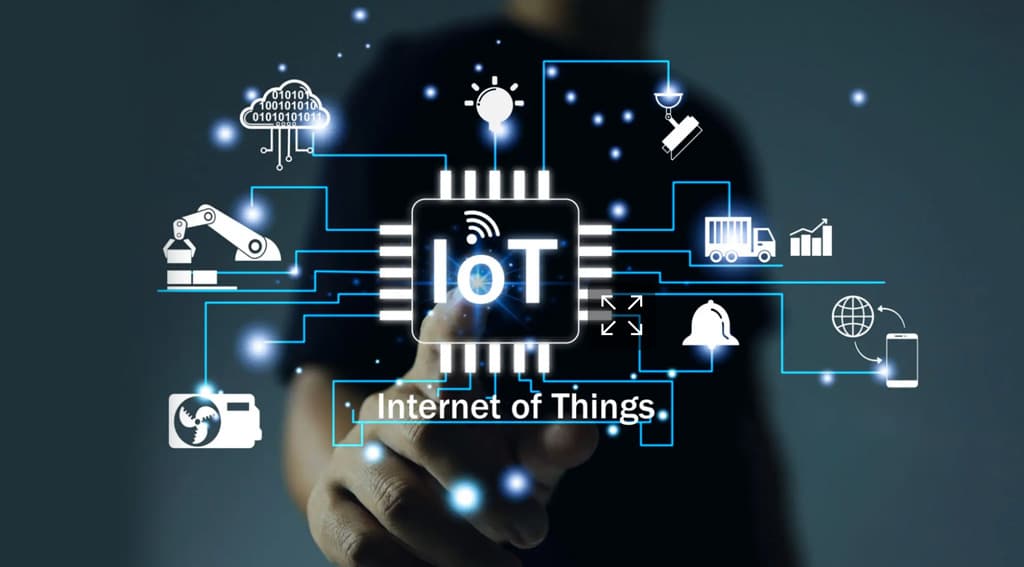










IoT Development Services
CHI Software delivers end-to-end IoT software development services across IT consulting, custom development, cloud engineering, data engineering, integration, QA, security, and long-term support. The work is organized around scalable device-to-cloud architectures rather than isolated features. That focus has commercial weight. Mordor Intelligence values the IoT platform market at USD 67.47 billion in 2026 and forecasts USD 121.81 billion by 2031, with hybrid platforms becoming the default for teams balancing latency, data residency, and cloud scale.
-
IoT Consulting & Solution Architecture
Every engagement starts with the constraints, not the tech stack. Our consulting services map data flows, define the IoT architecture, pick communication protocols, and test the risky assumptions with a proof of concept before budgets are locked. You get a design that names the trade-offs between edge computing, cloud integration, and unit cost instead of hiding them.
-
Web and Mobile Software Development for IoT
Device fleets need interfaces people actually use. Our IoT app development services build web dashboards and mobile apps for real-time monitoring, remote device management, and provisioning, connecting smart devices to the systems your operators already run every day.
-
IoT Cloud Platform Development
When device counts climb, the platform breaks first. We build IoT platforms that handle device management, data ingestion, and application enablement on AWS IoT Core and Azure IoT Hub, sized for the scalability a growing fleet will demand rather than the pilot in front of you.
-
Embedded Software & Firmware Development
Reliable connected products start at the silicon. Our embedded software development services cover firmware, RTOS work, and driver development for constrained embedded systems, and OTA updates are designed in from day one instead of being bolted on later. As the roadmap grows, you can hire embedded engineers or scope dedicated firmware development services.
-
IoT Integration With Enterprise Systems
Data trapped on a sensor earns nothing. CHI integration services cover device integration and hardware integration end-to-end, wiring sensors, IoT gateways, and edge nodes into ERP, CRM, and analytics layers. The aim is interoperability across vendors and protocols, so system integration stops being a recurring firefight every time a new device type arrives.
-
IoT QA, Security & Long-Term Support
Connected systems fail in ways a lab bench never shows. Our IoT testing covers firmware, device connectivity, and load behavior under field conditions, while IoT security is built into the architecture following NIST guidance instead of being patched after launch. Long-term support services keep fleets current as protocols and threats shift. The EU Cyber Resilience Act vulnerability-reporting rules are now in force. For IoT products in the EU, this is already required for devices in development. The architecture must provide vulnerability disclosure, security updates, and incident response before shipping any units.
Connected device data that never reaches the business intelligence layer delivers no operational value.
Integration across device, gateway, cloud, and analytics layers determines whether an IoT investment produces measurable ROI.
IoT Software Development Solutions We Deliver
CHI Software’s IoT development services group delivers outcomes an operator can measure: real-time visibility, predictive maintenance, automation, and higher asset utilization. Intelligence at the edge is where value now concentrates. Mordor Intelligence puts the AI in IoT market at USD 74.04 billion in 2026, on track for USD 199.46 billion by 2031, with software rather than hardware taking most of the spend.
-
Connected Products & Smart Devices
Consumer and prosumer hardware that has to feel instant. We build connected products and pair connected devices with the companion apps that make them useful, from wearables to home systems.
-
Remote Monitoring & Control Systems
Dashboards and control planes for equipment that runs unattended. Operators get live status, alerts, and remote control across distributed sites without a truck roll for every reading.
-
Industrial IoT & Predictive Maintenance
Industrial IoT turns machine noise into decisions. We build data processing pipelines and IoT data analytics that catch anomalies early, so predictive maintenance replaces the surprise of unplanned downtime.
-
Asset Tracking & Fleet Telematics
Know where assets are and how they behave. We deliver asset tracking and fleet telematics with location, condition, and usage data streamed into a single view your team can act on.
-
Smart Infrastructure & Energy Management
Buildings, grids, and utilities that respond to real demand. We connect metering and control systems for energy management that shows up in consumption figures, not slideware.
Our IoT Development Process
CHI reduces technical and migration risk with a staged process rather than a big-bang launch. Production governance reflects Google’s 2025 finding that AI amplifies whatever engineering discipline a team already has, and security-by-design follows NIST IR 8259 Rev. 1, finalized in 2026, which extends foundational security activities across the whole product life, not just the release moment.
-
Discovery & Feasibility Assessment
We pressure-test the idea against cost, connectivity, and hardware limits before a line of code exists.
-
Architecture & PoC Validation
Architecture and a working PoC confirm the assumptions most likely to break while they are still cheap to fix.
-
Firmware, Application & Cloud Development
Firmware, applications, and cloud services are built in parallel against one shared interface contract.
-
Integration & Testing
Integration and field-representative testing catch the failures that lab conditions politely hide.
-
Deployment, Monitoring & Optimization
Controlled rollout, monitoring, and knowledge transfer hand you a system your own team can run and extend.
Security and compliance requirements for connected devices apply to the architecture design, not the production release.
NIS2 and NIST IoT cybersecurity guidance cannot be retrofitted into a fleet already in the field.
IoT Technology Stack
The stack below reflects architecture choices tied to latency, interoperability, security, and edge-to-cloud scale, not a menu of logos. Mordor Intelligence notes that hybrid platforms combining device management, data ingestion, and application enablement are now the design standard for serious deployments.
-
- STM32
- ESP32
- Raspberry Pi
- NXP i.MX
- Nordic nRF
- TI
- Qualcomm
-
- Embedded Linux (Yocto, Buildroot)
- Android/AOSP
- FreeRTOS
- Zephyr
-
- MQTT
- AMQP
- CoAP
- BLE
- Wi-Fi
- Zigbee
- LoRaWAN
- LTE-M
- NB-IoT
- Modbus
- OPC UA
-
- AWS IoT Core
- Azure IoT Hub
-
- C
- C++
- Python
- Java
- JavaScript/TypeScript
- Kotlin
- Swift
- Rust
-
- React
- React Native
- Flutter
- Native iOS
- Android
-
- Kafka
- time-series databases
- data streaming tools
Our IoT Development Case Studies
Real projects, verified outcomes. Three connected systems we have taken to production.
-
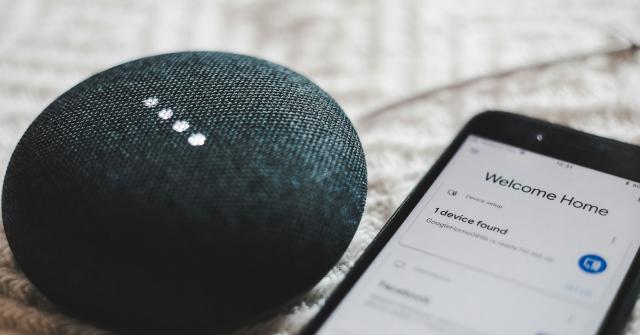 Case study
Internet of Things IoT Platform
Our client is a global Device-to-Cloud Internet of Things (IoT) technology company with a reach to nearly 750k developers and 20,000 business and enterprise customers, worldwide.
-
 Case study
Smart Watch IoT Wearables Solution
Our client is an American multinational social technology company.
-
 Case study
Auto Insurance Solution: Connected Cars X
Connected Cars X helps agents to set the smart coverage for aggressive drivers and help regular drivers to save on auto insurance.
Why Choose CHI Software as Your IoT Development Company
One partner across custom software, cloud, data, AI and MLOps, DevOps, integration, and security cuts vendor sprawl and handoff risk. As an Internet of Things software development company with embedded roots since 2013, CHI Software evolves IoT systems toward AI without needless replatforming.

Embedded & IoT Engineering Expertise
Firmware, connectivity, and cloud services under one roof, built by teams that have shipped constrained-hardware products, not only cloud apps.

Legacy Device and System Integration
Old devices, the dark assets of an aging fleet, and undocumented protocols are the normal starting point, not a blocker. As a legacy software modernization company, CHI brings aging fleets into modern data flows without a full rip-and-replace.

Scalable Device-to-Cloud Architectures
Systems are sized for the fleet you will have, not the pilot you are running now, so growth does not force a rebuild.

Security Across the IoT Ecosystem
Protection spans endpoints, gateway, cloud, and update path, aligned to NIST IR 8259 activities and NIS2 expectations from the architecture stage.

Flexible, AI-Ready IoT Architectures
Data pipelines and edge capacity are designed so that on-device AI arrives as an upgrade, not a second rebuild of the whole system.
Our Awards and Certifications







What Our Customers Say
I am very pleased with CHI Software’s exceptional work on our Workspace customer portal. Their business analysis and technical expertise were key to creating a sophisticated platform that serves 70+ London locations and enhances our customer experience. They excelled at turning complex business needs into practical solutions, including event management, community engagement, and building access integrations.

CHI Software played a crucial role in optimizing our mobile application, ensuring seamless functionality across iOS and Android platforms. Initially brought in for a short-term fix, their expertise quickly became indispensable as they resolved critical publishing issues, modernized outdated libraries, and enhanced navigation. Their proactive approach in identifying and fixing hidden flaws significantly improved app stability and usability. CHI Software’s adaptability, deep technical knowledge, and ability to streamline a previously fragmented system have made them a trusted technology partner in this project’s success.

Media Markt worked with CHI Software for over 4 years. During this time the CHI team made important contributions to our e-commerce projects and to one of our core proprietary technologies in the area of distributed data synchronization. Alongside outstanding technical skills, these engineers have always been highly reliable in terms of quality and deadlines. Taking into consideration my experience, I would highly recommend working with the CHISW engineering team.

Legacy IoT systems with no OTA update infrastructure and undocumented device protocols create a modernization problem that compounds with every new device generation shipped.
Map your legacy IoT modernization options before the next device generation ships.
IoT Development FAQ
-
Internet of Things development services cover the full path from sensor to dashboard: consulting and architecture, embedded and firmware work, cloud platforms, data pipelines, integration, testing, and long-term support. Done well, they connect physical hardware to the business systems that turn device data into decisions.
-
Yes, and most of our work involves existing hardware and mixed protocols. We connect legacy devices, sensors, and gateways to ERP, CRM, and analytics platforms and provide cloud integration services so data moves cleanly between the field and your back office.
-
We work across AWS IoT Core and Azure IoT Hub, and with protocols including MQTT, CoAP, BLE, Wi-Fi, Zigbee, LoRaWAN, LTE-M, NB-IoT, Modbus, and OPC UA. Protocol choice follows range, power, and bandwidth needs rather than habit.
-
Security is designed in, never added later. We follow NIST IR 8259 foundational activities and NIS2 expectations, with device identity, encrypted transport, signed OTA updates, and least-privilege access. Threat modeling happens during architecture, so the fleet ships securely.
-
Choosing an Internet of Things development company comes down to a few concrete checks. When you compare an IoT development services company against a smaller IoT development agency or a boutique IoT development firm, weigh embedded depth, security track record, and production references above headline price. Ask who owns the firmware, how OTA updates work, and how the vendor prevents lock-in.
-
Yes. We use phased migration so that current operations can keep running while devices and platforms migrate. Undocumented protocols and OTA gaps are mapped first, then handled one device generation at a time rather than in a single risky cutover.
-
A proof of concept can take weeks. A production fleet with hardware, firmware, cloud, and integrations usually runs for several months. Timelines depend on certification needs, hardware readiness, and the number of device types the platform must support.
-
Cost tracks scope: device complexity, connectivity, cloud scale, security and compliance depth, and support duration. We scope a fixed pilot first, so you see real numbers before committing to a full build.
